
Australian doctors denounce anti-hydroxychloroquine study as fake

Australian infectious disease researchers have raised the alarm about fake data in a study published in The Lancet denouncing the drug hydroxychloroquine in the treatment Covid-19. The Australian Department of Health has been stockpiling millions of doses of hydroxychloroquine.

The Lancet study prompted the World Health Organization to halt global trials on the drug even though it has been considered to be safe for decades already.

Dr Allen Cheng, an epidemiologist and infectious disease in Melbourne, told Guardian Australia he has never heard of Surgisphere, and no one from his hospital, The Alfred, had provided Surgisphere with data for The Lancet. “If they got this wrong, what else could be wrong?” Cheng warned. Another “red flag” for Cheng is that the paper listed only four authors.

He demanded that the Australian hospitals allegedly involved in the study be named.

The study, led by the Brigham and Women’s Hospital Center for Advanced Heart Disease in Boston, in the US, examined patients in hospitals worldwide, including allegedly in Australia. It claimed that researchers had gained access to data from five hospitals recording 600 Australian Covid-19 patients and 73 Australian deaths as of 21 April.

But data from Johns Hopkins University shows only 67 deaths from Covid-19 had been recorded in Australia by 21 April. The number did not rise to 73 until 23 April. The Lancet data is not readily available in Australian clinical databases either.

Guardian Australia also contacted the health departments of Australia’s two most populous states, New South Wales and Victoria, both registering the highest number of Covid-19 cases. Of the Australian deaths reported by 21 April, 14 were in Victoria and 26 in NSW.

The NSW Department of Health said it never provided Lancet researchers with the data from its databases, while Victoria’s department said the Lancet data did not reconcile with the state’s Coronavirus data, including hospital admissions and deaths.

The Lancet responded to the claims of faked data provided by the lead author of the study, Dr Mandeep Mehra: “We have asked the authors for clarifications, we know that they are investigating urgently, and we await their reply.”

In a statement, Surgisphere founder Dr Sapan Desai, also an author on the Lancet paper, claimed a hospital from Asia had accidentally been included in the Australian data.

Spain will continue to use hydroxychloroquine against the Coronavirus despite the French ban and the WHO’s sudden doubts, Spanish daily El Paìs reported.

The Spanish Agency for Medicines and Health Products (AEMPS) considers that the recent study published in The Lancet that warned about the risks of hydroxychloroquine does not provide conclusions “strong enough” to stop using this drug in Spain or stop research underway in hospitals.

This position contrasts with that adopted by France, which has just banned the use of this drug to treat Covid-19, and the doubts of the World Health Organization (WHO), which has suspended all trials. In both cases, the decision was taken after the questionable study was published in The Lancet.

Also, in the UK, the University of Edinburgh said it would continue their trial of the drug.

In France, Nicolas Dupont-Aignan, the leader of Debout la France party, said the government’s ban on hydroxychloroquine goes against the right to an inexpensive and effective medicine.

“This is a real state scandal”, said Dupont-Aignan. “The French government, because of stupidity or corruption, refuses French citizens treatment with hydroxychloroquine, which can save lives. And I think that the French will soon be outraged, because today this treatment is effective in many countries throughout the world”.

He said pressure came from pharmaceutical labs and vaccine promoters looking to earn billions if other treatments are banned. “Professor Raoul and his treatment regimen is like a little pebble in the boot of large pharmaceutical labs”, the politician noted.

Dupont-Aignan said Big Pharma influenced the decision taken by the WHO after The Lancet faked the data. “The WHO is influenced by pharmaceutical labs; it has lost credibility. The Lancet published a study – fabricated, not true – whose authors want to convince [people] that prescribing chloroquine is dangerous, that it is cardiotoxic… And we can clearly see the shadow of laboratories that want to sell us more expensive drugs or a hypothetical vaccine behind this fight against chloroquine, an inexpensive (almost free) medicine that could save hundreds of thousands of lives”.

According to him, the danger is that the French government “seeks to impose official medicine”. He added: “For over 70 years, chloroquine has been on the open market in our country. This is not a new drug. It has no contra-indications. It just needs to be prescribed reasonably, and that is what doctors should do.”

freewestmedia.com/2020/05/29/australian-doctors-denounce-anti-hydroxychloroquine-study-as-fake/
Outrage After Far-Left Pro-BDS Group Ties Israel to Minneapolis Police Violence

An attempt this week by the Democratic Socialists of America’s BDS national working group to tie Israel to recent incidents of US police violence against minorities has sparked outrage.

Referring to unrest on the streets of Minneapolis following the recent police killing of an unarmed African-American man, George Floyd, the group tweeted, “The police violence happening tonight in Minneapolis is straight out of the IDF playbook,” adding, “US cops train in Israel.”

“The racist and brutal tactics used by Israeli military and US cops are purposefully one and the same,” it charged, citing no evidence.

“So-called ‘less lethal’ weapons like tear gas are manufactured in the US and sold to Israel where they are tested and used on Palestinians,” the group claimed, before going on to say, “Surveillance tech is made in Israel & brought to the US to invade the privacy of Black, brown, Muslim, poor, and otherwise marginalized people.”

“This is the ‘special relationship’ between Israel and the United States,” it continued.

The DSA group’s statements were part of an ongoing organized campaign called “Deadly Exchange,” which posits that racist police tactics in the US are Israel’s fault.

Critics say that such claims are a blood libel and responsible for inciting incidents of antisemitic violence.

In response to the DSA group’s tweets, B’nai B’rith International told The Algemeiner, “This is a case of exploiting the tragic and tense situation in Minneapolis to advance the motives of the BDS movement to demean and delegitimize Israel.”

Rabbi Abraham Cooper — associate dean at the Simon Wiesenthal Center — said that, similar to previous attempts to exploit such incidents, “non-existent dots were connected” to portray “the Palestinians as people of color fighting white Israel. … We Jews know all about antisemites connecting non-existent dots to denigrate our people.”

algemeiner.com/2020/05/28/outrage-after-far-left-pro-bds-group-blames-israel-for-us-police-violence/

Speeding Iraqi asylum seeker kills German mother with his Mercedes car and can still hope for an acquittal

The horrible accident caused by a speeding car driver that resulted in a dead cyclist on Reicker Street in Dresden – the public prosecutor’s office now has charges against horsepower show-off Zoro T. (18 years old).

Unbelievable: The Iraqi-born Iraqi with Iranian passport can hope for a lenient sentence.

In January, the novice driver overtook a convoy of vehicles at murderous speed in a Mercedes E 320 CDI (204 hp), while having railway employee Kristiane H. († 55) on her bicycle overlooked and killed her.On the inner-city line 50 km/h were allowed. According to senior public prosecutor Jürgen Schmidt, the accused was driving “at significantly excessive speed despite the existing ban on overtaking”. The asylum seeker is accused of negligent killing and endangering road traffic. “As a result of the investigations carried out, we assume that he was driving below 100 km/h,” said Schmidt.The criminal is not in custody, the public prosecutor has not applied for an arrest warrant because of missing reasons for arrest. Criminal law expert Gerhard Rahn also sees this as an indication that the speeding killer is able to avoid a prison sentence. “If sentenced under juvenile criminal law, it will probably amount to probation,” Rahn said. Widower Olaf A. (61 years old), who lost his beloved wife in the speeding crash, is horrified: “No one can measure the pain he caused me, her daughter and her son. Anyone who races through the city so recklessly is acting intentionally. That’s why he has to go to prison!”

bild.de/regional/dresden/dresden-aktuell/nach-unfall-in-dresden-kommt-ps-protz-zoro-18-mit-bewaehrung-davon-70910528.bild.html?wtmc=fb.shr&fbclid=IwAR2Zed4J025_fUQDlPHnkNOZ3bJ0aZoEkasZfAz8eX2_OCcz36eTyFLZfdM

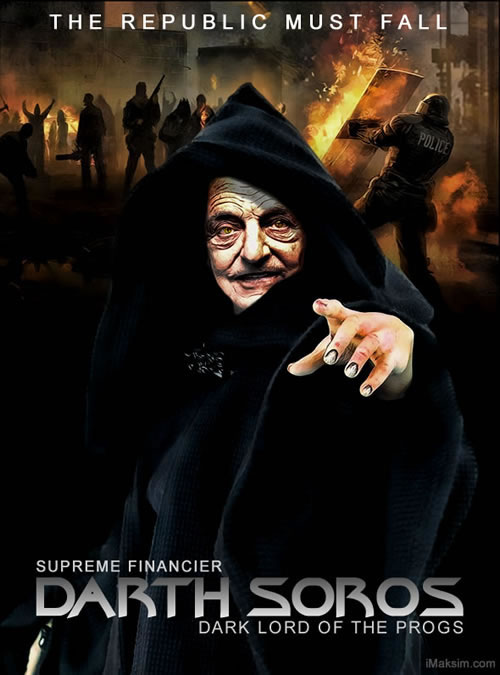
How George Soros used Hungary as his testing ground to build his ‘Soros empire’

“Feel free to just write that what was once a Soviet empire has become the Soros Empire,” billionaire George Soros told an American journalist in 1993 who was accompanying him on a tour Eastern Europe. The core Soros’s statement has become the basis of a new comprehensive analysis from Hungarian scholar Márton Békés of Soros’s so-called empire building that began in Hungary between 1984 and 1994.

Békés, who serves as research director of the House of Terror Museum and editor-in-chief of the commentary journal XXI, focuses on events mainly related to Hungary, and despite Soros having been described as everything from a billionaire philanthropist to a global stock market speculator, but Békés describes him as “the world’s greatest philosopher”.

In the study entitled The Birth of the Soros Empire, Békés begins the story towards its end, when Soros was visiting Romania in 1993 as part of a several weeks-long European tour — the same one where Soros claimed that  the Soviet empire became the “Soros empire”. The tour included visits to Temesvár and Bucharest in Romania, Kishinev in what is now the Republic of Moldova, as well as the Bulgarian capital Sofia, and the Albanian capital Tirana.

Békés writes that while intended as something of a victory tour to celebrate the completion of his Eastern European empire, Soros was rather disappointed with the results achieved up until that time.

Soros, who described himself as “having had quite strong Messianic desires from childhood” and “considered himself a genius or Messiah”, set for himself the goal of influencing the future of the entire world. In fact, he has been honest about his intentions, once saying his “goal is to become the conscience of the world.” By the mid-90s, his goals were still far from being achieved, but he was by all appearances on the right track.

The years between 1984 and 1994 played a key role in Soros’s influence building operations and partly culminated in November 2017 when he reallocated much of his personal wealth, about $18 billion, to his Open Society Foundation, which he has since chaired.

The organization is one of the most influential progressive organizations in the world, if not the most influential, in part due to its enormous wealth.

Soros used his wealth to gain enormous influence

Despite his very limited philosophical background, Soros based his stock market trading on the “general theory of reflexivity”, his own invention which purports that the roots of human action lie in the mistakes made as a result of insufficient information and the consequences of these wrong decisions.

Taught by his father, who witnessed the Soviet Revolution first hand, he is not seeking equilibrium, but rather exploits the imbalances of demand and supply. Consequently, he began his empire-building in parts of the world where balance has temporarily given way to revolution, migration or regime change.

He never made it a secret that “opening up closed societies” and his machinations on financial markets were intertwined. His initial company, the Quantum Fund, founded in 1969, had a share capital of just $4 million at its inception, but its value quadrupled between 1979 and 1981, from $100 million to $400 million. It was at this time, in 1979, that he formed an organization that, in honor of his mentor Karl Popper, was named the Open Society Foundation.

Hungary became the ‘testing ground’ for Soros

The foundation began its expansion in Hungary in 1984, through the Hungarian Academy of Sciences. One year after its founding, in an agreement with the communist state party, it began paying scholarships to Hungarian researchers to attend American universities.

Many of those involved with Soros at the time would go on to be influential members of the Hungarian opposition, such as Miklós Haraszti and János Kenedi, who both played pivotal roles in Soros’s organizations. Later, Soros asked Miklós Vásárhelyi, who spent a year in 1984 at Columbia University, to represent him in Hungary, and his lawyer became Alajos Dornbach, who defended Haraszti in a notable lawsuit ten years earlier.

These individuals all became founding members of the now-defunct Alliance of Free Democrats (SZDSZ) in 1989, with Dornbach, Haraszti and Vásárhelyi serving as the party’s members of parliament from 1990, and János Kis serving as its first president. Kis is considered the first leader of the Hungarian opposition serving in parliament.

The SZDSZ went on to become the junior coalition partner of the majority Socialist Party in Hungary from 1994 to 1998.

Back in the 1980s, Hungary’s then ruling communist strongman, János Kádár, was not particularly happy about Soros supporting his opponents, but they eventually came to an understanding which allowed Soros to continue expanding his network while Communist Hungary could demonstrate its openness to the Western world.

By the end of the 1980s, the Soros Foundation had a direct grant agreement with the Hungarian Ministry of Culture, the Karl Marx University of Economics and the Budapest University of Technology. In the decade from 1984 to 1994, the billionaire donated an average of $3 million a year to his goals in Hungary, including more than 2,000 grants, 700 xerox machines, more than 700 domestic scholarships, and help with maintaining nearly 140 newspapers and magazines.

In essence, Hungary became a testing ground during the crumbling Soviet regime for the future expansion of Soros’s Open Society Foundation. In 1987, he established offices and a foundation committee in Moscow and Warsaw and between 1989 and 1990, he established his first foundation office in Kiev. From there, he began expanding further across Central and Eastern Europe, establishing 22 foundations in the region by 1993.

By 2018, Soros’s network grew to include office in 37 countries, but effectively active in 140 countries of the world.  

According to Magyar Nemzet, Soros’s “long march through the institutions” lasted a total of ten years in Hungary and ultimately led to him gaining or securing key positions for local supporters of the “open society”. These positions were not only directly involved in politics but also in culture where they were well suited to indirectly influence the politics of the nation.

rmx.news/article/article/how-george-soros-built-his-empire-in-hungary-and-beyond

President of El Salvador Announces That He is Taking Hydroxychloroquine, Says ‘Most World Leaders’ Doing the Same

Bukele told reporters on Tuesday that “most world leaders” are doing the same and has questioned why world leaders are being advised to use it while the public is not.

“I use it as a prophylaxis, President Trump uses it as a prophylaxis, most of the world’s leaders use it as a prophylaxis,” said Bukele.

President Donald Trump has been a proponent of the drug, which is normally used to treat malaria, and recently announced that he had been taking it.

“A lot of good things have come out about the hydroxy. You’d be surprised at how many people are taking it, especially the frontline workers,” Trump said at the White House on April 19. “I happen to be taking it. I’m taking it, hydroxychloroquine. Right now.”

Trump has since completed his regimen.

https://vladtepesblog.com/

Germans are angry that migrants get more rights and benefits than citizens who worked their whole life: CDU minister

The German public is growing resentful that migrants have more rights to benefits than Germans who have worked their whole life, said German Interior Minister for the state of Saaraland Klaus Bouillon in a revealing interview with Die Welt.

“There is great discontent among the population because everyone who arrives here immediately has many or even more rights along with rights to benefits and medical care than someone who has worked here for their entire life,” said Bouillon.

In regard to taking in accepting more migrants, Boullion believes Germans have less and less tolerance for new arrivals. Germany has already recorded a record number of foreigners in 2019 and some German state parliaments have voted to stop accepting more migrants in a sign of growing public weariness over the massive demographic changes taking place in the country.

“The willingness and acceptance in the country to accept people has decreased. We probably would not be able to activate enough volunteers anymore. In addition, our absorption capacity is a big problem,” the interior minister said.

Boullion, a member of the Christian Democratic Union (CDU), says that the frustrations over the migrant situation in the country have made their way into everyday conversations as well.

“There is great resentment and frustration, which I hear in conversation every day. Basic amounts of benefits are established by law. Even if someone throws away their passport and does not cooperate with the authorities, their benefits can be reduced only minimally,” he noted.

Polling seems to support Boullion’s viewpoint as well. For example, last year, a poll of 27 European Union countries found that in Germany, 48 percent of Germans said they were opposed to the country taking in more non-EU migrants while 44 percent continued to support this type of migration.

‘We have people who come back four, five, six times after we have deported them’

The city of Lebach is one of the main destinations for migrants in Saarland, which is located in the Western part of Germany near the French border. Boullion says that over time the countries of origin for migrants have changed, and many of them are no longer entitled to protection status or have already registered as refugees in other European countries, which would make them ineligible to stay in Germany.

“In addition, half of those arriving at the moment have lost their passport or suddenly forgotten their name and country of origin,” said Boullion.

The interior minister also said that reception center in Lebach continuously fills up because 50 percent of deportations fail. He noted cases when families are set for deportations, suddenly the child that is meant to be deported with them can no longer be found. In many cases, those who are deported simply come back.

“We have people who come back four, five, six times after we have deported them to the EU country where they were first registered,” he said. “You simply come back from Belgium with the FlixBus. Then the whole process starts all over again. At least 100,000 people in Germany are finally rejected, but we simply cannot get them back to their home countries.”

Boullion believes that certain loopholes can be quickly closed in the asylum law. Currently, family members can apply for asylum one after another upon being rejected. For example, a mother can first apply, and if she is rejected, the father can then apply, and then a child, and so on. Under the process, each family member’s case can take months until the next one is started anew.

In the meantime, the whole migrant family can remain in Germany. The interior minister believes that an application should be made for the whole family at once to hasten the process.

In Germany, the Green Party is pushing to dissolve the reception center in Lebach and to disperse the migrants across the state of Saarland to individual municipalities. Boullion argues that it is not only against the law, but that Lebach offers a kindergarten, doctors, integration courses, violence prevention, and schools all in one place. Authorities can also process registrations for faster in one centralized location.

The interior minister accused the Greens of having a lot of “dreamers” in their party who want to invite more migrants to Germany. Many top Green Party politicians have advocated for Germany to accept more migrants, including during the recent migrant crisis this year when Turkey opened its border to the Europe resulting in thousands of migrants trying to enter through Greece.

There are also currently those in the CDU party who are advocating migrant quotas, such as Prime Minister of Schleswig-Holstein Daniel Günther. Boullion says that such proposals will only encourage more migration to Germany.

rmx.news/article/article/germans-are-angry-that-migrants-get-more-rights-and-benefits-than-citizens-who-worked-their-whole-life-cdu-minister

“Vive l’Islam, vive Allah” on Paris streets

by Giulio Meotti

The first death threat to Éric Zemmour dates back to June 7, 2012, when a letter arrived to RTL radio, his employer, on rue Bayard in the Eighth arrondissement of Paris. Zemmour is called “SS in freedom” and the letter’s authors announced that they want to physically attack the journalist and his family.

The latest threat two weeks ago also prompted French President Emmanuel Macron to express solidarity with him. And “Paris. France 2020. This woman railed against Zemmour in the name of ‘Vive Islam! Vive Allah’. It’s ridiculous, I don’t accept it. I refuse to get used to it,” said lawyer Gilles-William Goldnadel in a video.

This anti-immigration and anti-system journalist of Le Figaro, the most critical of integration and the banlieue, was walking on the streets of Paris when a woman approached him shouting “Éric Zemmour! Long live Islam! Long live Allah! Long live Muhammad!”. It is the second episode in two weeks.

The first was on May 1. Zemmour had always been attacked and insulted in Paris while shopping. “Son of a b***! F*** your mother!”, an Arab yelled at him. The video, which went viral, caused a wave of indignation from politicians on all sides.

Last November, Zemmour was called a “Zionist bastard” in front of the Cnews headquarters during a demonstration. A rally called “Stop Zemmour” had been called to take place before the doors of the broadcaster who enlisted the right-wing polemicist. The co-founder of the Coordination against Racism and Islamophobia, Abedelaziz Chaambi, took the stage and called Zemmour a “Zionist bastard”, “virus” and “disgusting beast”.

A few days later, during the great “march against Islamophobia” at the Place de la République, a speaker on the stage harangued the crowd: “If you don’t like Zemmour, clap your hands!”

The journalist has so far escaped the worst. But until when? “If this story could open the eyes to all those who, by dehumanizing their opponents, hang targets on their back…,” wrote Céline Pina in Le Figaro. And Zemmour is certainly not alone.

A year ago, the Jewish philosopher Alain Finkielkraut was threatened with death and addressed by a Salafist during a demonstration of the yellow vests. Finkielkraut himself would later confess: “I’m afraid to walk in the street.”

The author of the attack on Zemmour, Mehdi K., calls himself “haram”, forbidden. Rappers hate Zemmour. And Youssoupha declaims: “Who will silence this stupid Zemmour”?

His friend, the journalist Eric Naulleau, is worried: “One day, there will be a drama”. Even Zemmour’s father thinks about it: “They will kill him.”

Welcome to Europe. They call it “multiculturalism.”

http://www.israelnationalnews.com/News/News.aspx/281016