First Win For Boris On Brexit Trade Talks
Reply

Violence is escalating at the EU’s external border between Greece and Turkey following Erdogan’s declaration of the borders to Greece as ‘open’.
According to as yet unconfirmed claims by the Turkish Ministry of the Interior, almost 78,000 migrants are said to have left Turkey for Greece in the last 48 hours, and international organisations say that up to 15,000 mostly Syrian migrants have gathered at the border crossings to Greece. Greece has set up strong police and military units at the border crossings to secure the border and prevent illegal entry. According to local media reports, migrants have now started to attack the Greek security forces, including with the use of teargas grenades. The teargas grenades fired by migrants at the Greek security forces are allegedly made by Turkish companies (photo above). As the official government spokesman Stelios Petsas explained, Greece had been confronted with and resisted an organised illegal mass attempt to violate the border. According to him, 66 invading migrants were arrested. According to reports, Greece is now also reported to have transferred naval vessels to the East Aegean, as migrants – with the support of Turkish authorities – are also trying to land illegally on Greek islands by sea from Turkey.
haolam.de/artikel/Deutschland/40351/Greifen-Migranten-griechische-Polizisten-mit-Trnengasgranaten-an-.html
by Giulio Meotti
“The carnival is over. Easter Lent begins. And the German Constitutional Court announces a decision that has to do with life and death.” Thus began the comment by Alexander Kissler, journalist for Cicero magazine, on the historic decision of the German Supreme Court which declared article 217 of the Criminal Code, prohibiting any form of the advertising of euthanasia, null and void.
The President of the Court, Andreas Vosskuhle, says that “everyone has the right to commit suicide, regardless of his personal situation.” Kissler thus speaks of the “entry into organized death” and of “a step back in terms of freedom.”
Former Health Minister Hermann Gröhe, who wanted the ban, talks about “normalizing suicide as a treatment”. The Catholic and Evangelical churches have strongly criticized the sentence: “t is a break in our culture, oriented towards the affirmation and promotion of life.” Viennese philosopher Susanne Kummer is very harsh: “The rule of law renounces protecting the weakest in favor of the strongest.”
According to Swiss media reports, euthanasia associations Exit, Eternal Spirit and Dignitas have an annual turnover of almost ten million euros. The German sentence is a bonanza for them. “In Holland they are now discussing euthanasia for the elderly who are not sick but tired of living,” Kummer explained in a conversation with me. “Peter Singer has made it clear that we must be able to decide whether you are sick or not. The end of this society is Canada, where doctors offer euthanasia before palliative care. We are creating a society where nobody has to suffer anymore. Instead of helping them not to suffer, we kill them. There are economic arguments, the end of religion and the family that has been destroyed, so there are many lonely people.”
In 18 years, since the law gave doctors the power to kill patients who request it, there have been over 10,000 euthanasia cases in Belgium. A few weeks ago, for the first time, three doctors find themselves responding to charges of murder in Belgium, which in the words of the scientific journal Psychiatric Times has become “the epicenter of psychiatric euthanasia.”
They have been set free. The woman at the center of the case, the thirty-eight year old Tine Nys, according to prosecutors was not suitable for euthanasia. Her family claimed that the girl did not have any incurable mental disorder, as required by law, but that she wanted to die after a failed love relationship. Nys had called a famous psychiatrist, Lieve Thienpont, who according to the media is involved in a third of all cases of euthanasia for psychiatric problems. Thienpont diagnosed her with Asperger’s syndrome, the same mild form of autism affecting the champion of environmentalism Greta Thunberg. Based on this new diagnosis by Asperger, Thienpont authorized Nys’s euthanasia.
The West as a whole has a death wish. You see it from the falling birth rates, the destruction of the natural family, the collapse of religion and now from the proliferation of euthanasia laws.
Richard Engel, the NBC’s chief foreign correspondent, just twittered about coronavirus: “Don’t panic. Doctors/ virologists I’m speaking to say 98% of people will be fine, even if they get Covid-19. They expect it will go around the world, but that most people who get it will be a little sick, then recover. The danger is to vulnerable people. Hospitals/ old age homes”. So to Richard Engel it doesn’t matter?
Lebensunwertes Leben. Lives unworthy of being lived, the Nazis said.
http://www.israelnationalnews.com/Articles/Article.aspx/25289
Sweden’s ruling Social Democrats saw their worst-ever results in a new poll released by Ipsos this week, as they remain behind the populist Sweden Democrats.
The results for the Social Democrats, 22 per cent, are the worst Sweden’s governing party has ever seen. The relatively new, anti-mass migration Sweden Democrats are now ahead of them by 0.3 per cent, Nyheter Idag reports.
Ipsos opinion analyst Nicklas Källebring commented on the results, saying that the populist SD has managed to establish itself “on a whole new level.”
“Much of the debate has been about crime and refugee reception over the past six months. Also, some of Stefan Löfven’s statements have not landed well and his confidence figures are developing in the wrong direction,” Källebring added.
The Sweden Democrats have routinely performed well in prior polls on the topic of immigration, with SD leader Jimmie Åkesson winning a debate on the subject of immigration prior to the last national election in 2018.
The rise of violent gang crime, particularly the surge in explosions and bombings in the last year, has also shaken public confidence in the government of Prime Minister Stefan Löfven.
A poll released last year suggested that only eight per cent of the public believed the government could solve the issue in a timely manner.
Another poll, released in 2018, claimed that 73 per cent of Swedes believed the country was going in the “wrong direction,” and that many citizens were chiefly concerned with crime, unemployment, and immigration.
In both the 2018 national elections and the 2019 European Parliament elections, the Social Democrats saw incredibly poor performances, while the Sweden Democrats have consistently grown.
The Ipsos poll is just the latest national poll to see the Sweden Democrats in the lead. Earlier this year, for the first time, SD leader Jimmie Akesson tied for first place as the party leader with the most voter confidence.
On March 6, 2019, Britain’s Equalities and Human Rights Commission launched a probe into claims that the country’s Labour Party, currently led by the lifelong Trotskyite Jeremy Corbyn, is “institutionally anti-Semitic”.
We are all too familiar with the development that the conflation of antisemitism and antizionism may be found today within politics.[1] Challenging this distortion remains a priority in Western countries. Fortunately, as recent events within Britain’s Labour Party have shown, many constituents are rejecting the overt antisemitism and anti-Israel extremism of the groups who have often underhandedly taken control of their party.[2]
It increasingly seems as if one source of antisemitism — as shown by more than one survey in Europe and in the United States — is that there often seems to be widespread antisemitism within Muslim communities (here, here and here).
Islamic hatred of Jews is deeply rooted. It can be seen in the later verses of the Qur’an, in Muhammad’s expulsions, mass executions, and enslavement of the Jews of Medina, or in the attack on Jews in the oasis of Khaybar.
Islamic antisemitism continued to have a largely negative impact on Jews living under Muslim rule in the Middle East, North Africa and parts of Europe down the centuries. Sometimes Jews were treated better than they were in Christian countries, for instance during the Inquisition; at other times, there were massacres; but in all instances, Jews suffered a variety of humiliations as second-class “dhimmis”: people with a scripture who were due protection by Muslims but demeaned for their failure to recognize the prophet Muhammad as the true Messiah.[3]
The German political scientist Matthias Künzel summed it up:
Islamic anti-Semitism, although not restricted to the Islamist movements, is a key factor in the Islamists’ war against the modern world.
It lies behind Tehran’s desire to destroy the “cancerous tumor” of Israel and motivated the recent Iranian attack on Israel by an armed drone. It inspires Recep Tayyip Erdogan’s threat that Israelis won’t be able “to find a tree to hide behind”, a clear allusion to a hadith that demands the killing of Jews. It causes Mahmoud Abbas to deny any connection between Jerusalem and the Jews and transforms the political conflict between Israel and the Arabs into a religious struggle between right and wrong.
Islamic antisemitism mobilizes the terrorists of the Islamic State to murder Jews in Europe and it ensures that not only in Amman, but also in Berlin and Malmo Arabs threaten Jews with this particular war cry: Khaybar, Khaybar, O Jews; the army of Muhammad will return.Khaybar is the name of an oasis inhabited by Jews that Mohammed conquered in blood in 628. It is also the name of an assault rifle made in Iran and a type of rocket used by Hezbollah to fire at Israeli cities in 2006.
A 2014 survey of antisemitism by the US Anti-Defamation League (ADL) covered 100 countries. It found that all the countries in the top 10 most antisemitic locations were in the Middle East or north Africa region, with an overall figure of 73%. The West Bank and Gaza came at the top, with 93% of Palestinians expressing antisemitic views.
A smaller survey of 19 countries published by the ADL in the following year found that Muslim populations in general had the highest levels of antisemitism in Europe:
For the first time, the ADL poll measured Muslim attitudes in Belgium, France, Germany, Italy, Spain, and the U.K. An average of 55 percent of Western European Muslims harbored anti-Semitic attitudes. Acceptance of anti-Semitic stereotypes by Muslims in these countries was substantially higher than among the national population in each country, though lower than corresponding figures of 75 percent in 2014 for Muslims in the Middle East and North Africa (MENA).
In the United States, a 2017 report on antisemitism in general, identified much of the hatred as coming from the Muslim community, notably on college campuses:
It is particularly disturbing that anti-Semitism appears to be relatively common in the American Muslim community, including among its leaders.
Muslim expression of anti-Semitic views has become especially common on American college campuses.
Several Muslim attacks on Jews, synagogues and more are listed in the report. Here, anti-Jewish prejudice is, as often as not, conflated with anti-zionist ideology and activism. Again, that distortion, in turn, leads many people, most often on the left, to indulge Muslim antisemitism, to join Islamic protests, and even, as Britain’s Labour leader Jeremy Corbyn did for many years, to call Muslim terrorist groups such as Hamas and Hezbollah “friends”.
Some anti-zionism is bolstered by the widespread rationalization that Palestinian resistance to Israel is in harmony with one’s own secular political convictions. Palestinians and their supporters across the Islamic world are thought to be protesting and fighting for nationalistic, anti-colonial, and economic motives combined with an anti-apartheid pro-refugee set of priorities. Fatah, the Palestine Liberation Organization’s leading party, for example, is proclaimed as a “secular, nationalist” entity. The first article in the PLO’s 1964 Covenant reads: “Palestine is an Arab homeland bound by strong Arab national ties to the rest of the Arab Countries and which together form the great Arab homeland.”
Some in the international community came to see the Palestinian struggle for a state as a natural successor to their actions over the Vietnam War, the anti-Apartheid Movement, and general anti-imperialist values. Religion, let alone old-fashioned land-grabs, did not (and still do not) enter into their thinking on this and related issues.
The 1988 Covenant (Mithaq) of Jeremy Corbyn’s good friends (and Israel’s enemies), however, could not be more religious in nature. It opens with the words:
Praise be unto Allah, to whom we resort for help, and whose forgiveness, guidance and support we seek; Allah bless the Prophet and grant him salvation, his companions and supporters, and to those who carried out his message and adopted his laws – everlasting prayers and salvation as long as the earth and heaven will last.
It continues: “Our struggle against the Jews is very great and very serious.”
Note that they say they are fighting “Jews”, not “Israelis”.
Article One reads:
The Islamic Resistance Movement: The Movement’s programme is Islam. From it, it draws its ideas, ways of thinking and understanding of the universe, life and man. It resorts to it for judgement in all its conduct, and it is inspired by it for guidance of its steps.
Article Five reads:
By adopting Islam as its way of life, the Movement goes back to the time of the birth of the Islamic message, of the righteous ancestor, for Allah is its target, the Prophet is its example and the Koran is its constitution. Its extent in place is anywhere that there are Moslems who embrace Islam as their way of life everywhere in the globe. This being so, it extends to the depth of the earth and reaches out to the heaven.
Its 2017 Covenant speaks of Palestine as “The land of the Arab Palestinian people” and, even though it plays down overt antisemitism, it opens with the words, “Praise be to Allah, the Lord of all worlds. May the peace and blessings of Allah be upon Muhammad, the Master of Messengers and the Leader of the mujahidin, and upon his household and all his companions.” Moreover, its Preamble contradicts in its second line the nationalist tone by stating that:
Palestine is a land whose status has been elevated by Islam, a faith that holds it in high esteem, that breathes through it its spirit and just values and that lays the foundation for the doctrine of defending and protecting it.
Corbyn’s other friend, Hezbollah, does not have a Covenant, but does have something very like it — its 1985 al-Risala al-maftuha (or Open Letter) in which its founding spiritual mentor, Shaykh Muhammad Hussein Fadlallah, set out the movement’s program. Its second paragraph reads:
We are an umma [people] linked to the Muslims of the whole world by the solid doctrinal and religious connection of Islam, whose message God wanted to be fulfilled by the Seal of the Prophets, i.e., Muhammad.
The following paragraph continues:
As for our culture, it is based on the Holy Koran, the Sunna and the legal rulings of the faqih who is our source of imitation (marja’ al-taqlid).[4] Our culture is crystal clear. It is not complicated and is accessible to all.
A client of Iran, Hezbollah, although based in Lebanon, continually threatens to destroy Israel and includes Israel among its enemies:
Friends, wherever you are in Lebanon… we are in agreement with you on the great and necessary objectives: destroying American hegemony in our land; putting an end to the burdensome Israeli Occupation.
Hezbollah is not alone in its focus on Israel and the Palestinians, ostensibly derived from an underlying religious conviction that it is impermissible under shari’a law for non-Muslims to occupy land that had for centuries endured under Islamic rule — just as many Muslim continue to claim a “right of return” to “al Andalus” in most of Spain.
Curiously, while this rule applies to other lands, such as Spain and Portugal, they are regularly ignored in favour of “Palestine”. In a 2017 article titled “The deep reason Muslim world hates Zionism”, Rafael Castro writes:
Cultural and political demands advanced by Berbers, Kurds and Chechens have been frustrated. Muslim claims over Mindanao and Southern Thailand have been crushed. Yet Islamic solidarity and support for the Palestinian cause dwarfs the solidarity and support provided to urgent Muslim causes elsewhere.
Castro links this view to a seemingly mythical Islamic version of history:
According to Islamic tradition, the biblical Abraham, Moses, David and Solomon were Muslim prophets. The Israelites were also originally Muslim. The corollary is Islamic supersession, namely the belief that Muslims—and not Jews—are the legitimate heirs to the Israelite faith and homeland.
Anshel Pfeffer, a left-wing secular British journalist who has specialized in Israeli affairs wrote in 2014, “The Israel-Palestine conflict is not just about land. It’s a bitter religious war”:
Celebratory images of blood-stained cleavers, popularised in Isis beheading clips, quickly flooded many Palestinian websites and Facebook pages. It did not matter that the chosen targets were elderly civilians inside Israel’s pre-1967 borders.
This is what a religious war looks like, and we should stop kidding ourselves that this is not what has been happening in the Middle East. In various degrees it’s been going on for a century. Yes, it is also a conflict over a piece of land between two nations, and not all Israelis and Palestinians – hopefully still a minority in both societies – want to see this as a struggle between Muslims and Jews, but there are enough of them who do.
Mohammad Galal Mostafa, a former Egyptian diplomat and researcher at Brandeis University, wrote an essay in 2018 that also focuses on the religious dimensions of the conflict:
The Israeli-Palestinian conflict is driven by several factors: ethnic, national, historical, and religious. This brief essay focuses on the religious dimension of the conflict, which both historical and recent events suggest lies at its core. That much is almost a truism. What is less often appreciated, however, is how much religion impacts the identity of actors implicated in this conflict, the practical issues at stake, and the relevant policies and attitudes — even of non-religious participants on both sides. It follows that religion must also be part of any real solution to this tragic and protracted conflict.
Finally, the secularist Palestinian Authority and other Palestinian leaders have also recently decided to emphasize the religious element in their struggle. They really are not that emphatic about either religion or the truth. They are not even that emphatic about having a state. They are emphatic about obliterating Israel.
In an article dated March 4, 2019, the award-winning Arab journalist Khalid Abu Toameh identified a trend in both secular and religious Palestinian authorities in Gaza and the West Bank. This trend, he noted, aims to counter political moves in parts of the Arab world to normalize relations with Israel, and does this by returning to religious themes as a justification for rejecting attempts normalization. Abu Toameh observes that:
In a recent move, Palestinians have begun resorting to Islam to justify their vehement opposition to normalization of relations with Israel. Palestinian leaders and activists have long cited political and nationalist reasons to explain their opposition to any form of normalization with Israel — but Islam is a new factor in the mix.
Abu Toameh draws special attention to a group of religious scholars in Gaza:
a group of Palestinian Islamic scholars issued yet another fatwa(Islamic religious opinion) on March 3 warning against any form of normalization with the “Zionist entity.”
The scholars are hoping that their fatwa will rally Muslims worldwide to the Palestinian campaign against normalization with Israel. By issuing such fatwas, the Palestinians are clearly hoping to turn the conflict with Israel into a religious one.
The Gaza-based group, called Palestinian Scholars’ Association, said in its fatwa that according to the rulings of Islam, “normalization with the Zionist enemy, and accepting it in the region, is one of the most dangerous penetrations of the Muslim community and a threat to its security, as well as a corruption of its doctrine and a loss of its youths.”
The scholars go on to explain that “normalization and reconciliation means empowerment of Jews over the land of the Muslims, surrender to the infidels and loss of religion and Islamic lands.”
What is not said, of course, is that there also seem to be increasing incursions, religious or otherwise, into lands that have never historically been under the rule of Islam – for instance Nigeria, Malaysia and Indonesia.
The underlying Islamic antisemitism, however, so long denied by many Palestinians and many of their left-oriented supporters, has been slowly coming to the fore. Although it has been there all along, it now appears in the context of the Islamic revival that has taken place over the past four decades. In the end, the only thing that can oppose it will be a renewal of a secular reform that once had a deep impact in many Muslim countries, only to falter after the Iranian Islamic Revolution of 1979. Without that, peace may never return to the Middle East.
[1] See, among others, David Hirsh, Contemporary Left Antisemitism, London, 2017 and Dave Rich The Left’s Jewish Problem, fully updated 2nd ed., London, 2018
[2] For a recent detailed analysis of how this happened, see Tom Bower, Dangerous Hero: Corbyn’s Ruthless Plot for Power, London, 2019.
[3] For a full study, see Andrew G. Bostom, The Legacy of Islamic Antisemitism: From Sacred Texts to Solemn History, Amherst NY, reprint ed. 2008.
[4] A major religious leader in Shi’ism whose legal and spiritual rulings must be obeyed. In this case the Imam Khomeini.
https://www.gatestoneinstitute.org/15020/imported-antisemitism-supporters
Because of the Coronavirus epidemic in northern Italy, Germany has temporarily suspended deportations of illegal migrants to the country.
The measure primarily concerns expulsions based on the Dublin procedure, the German Bild newspaper reported, citing the Federal Office for Migration and Refugees (BAMF).
According to the report, asylum seekers who submitted their application in Italy but traveled to Germany initially will remain in the Federal Republic instead of going back to the European country where they first asked for asylum in order to process their application.
In connection with this, Federal Interior Minister Horst Seehofer (CSU) praised the Italian government during a press conference for its decision to quarantine migrant ships to prevent the virus from spreading.
The duration of the deportation ban will have an impact on the asylum procedure. Germany has six months to deport migrants if the initial reception state agrees to take them back. The deadline for arrests is twelve months. After the deadlines have passed, a decision must be made on the asylum application in Germany. It is currently unclear how long the deportation ban will remain in force.
freewestmedia.com/2020/03/01/coronavirus-germany-bans-dublin-deportees-from-returning-to-italy/
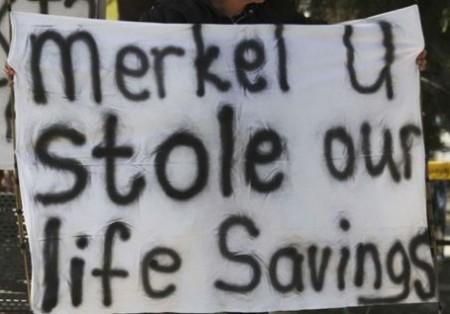
Angela Merkel is preparing for an emergency Brexit summit in what analysts claim is proof that “the EU fears a no deal more than the UK does”. German Chancellor Angela Merkel is preparing to host a last-minute crisis summit with Boris Johnson if this year’s Brexit trade talks collapse. Brussels insiders claim that this suggests the EU is already planning for talks with the UK to break down. Former Brexit Party candidate Pete Durnell claimed that this was proof that a no deal Brexit would be more damaging economically for the EU.
According to EU insiders this week, Mrs Merkel is planning to use her country’s presidency of the EU in the second half of the year as a means of brokering an emergency Brexit summit.
This comes after British Prime Minister Boris Johnson warned Brussels that he would be prepared to walk away from talks by June if a deal is not outlined.
EU sources claim the bloc is expecting a huge trade row to explode in June.
An EU ambassador said both Berlin and Paris expect trade talks to miss the summer deadline set out in Boris Johnson’s lead negotiator David Frost’s mandate.
Mr Durnell said: “In 2018 the UK actually operated a sixty-six billion overall trade deficit with the EU and their nations, so in other words, they sold us sixty-six billion more goods and services than we sold to them.
“If we apply equal tariffs to both what we export to them, and what they export back to us, then basically, we win big overall.
“I would say that under WTO rules, although some of our exporters to the EU will suffer, because they will have these tariffs to put on their goods and services, they could and should be easily compensated by our government.
“Because of this huge difference in what we sell to them compared to what they sell to us, we are basically in a very strong negotiating position.”
Speaking out about the ongoing budget crisis in the EU, Mr Durnell said that the huge £62bn Brexit gap was taking its toll on the bloc.
He explained: “The Germans, the French and the Dutch are all going to have to stump up the UK’s missing billions.
“The EU being the EU, has basically refused to reduce its budget upon Britain’s departure, which would be the logical thing to do.”
express.co.uk/news/uk/1249167/EU-plot-Angela-Merkel-Brussels-Germany-Boris-Johnson-brexit-latest
European Union officials now have a new newspeak term for migrant quotas known as “compulsory solidarity”.
It’s a term recently used in a Czech TV interview with EU Commissioner for Home Affairs Ylva Johansson, who said that when it comes to migrant quotas, “solidarity” should not be a choice, but instead forced on other countries. In other words, the EU should have “compulsory solidarity”, as she so bluntly put it.
But what does this phrase mean? Will Central European states and those who reject the open border policies Europe is embracing be punished for not being “solidaric” enough?
Although I am not a fan of comparing the European Union with the Soviet Union, given that the level of personal freedom, well-being and degree of sovereignty enjoyed by individual EU member states, this does not mean that the EU does not have some serious deficits.
When leaders and bureaucrats start bandying about terms like “compulsory solidarity”, it comes dangerously close to employing the language and mind-bending propaganda tricks employed by some of the worst totalitarian regimes.
The EU should be better than that.
These sorts of strange yet worrying terms partly arise due to the difficulty of balancing the conflicting economic and political interests of member states, however, the most significant reason has to do with the EU’s obsession with “producing” unified policies for all member countries even when such policies are rejected by more than a few democratically-elected leaders
Johansson’s recent interview on Czech TV only reveals the bizarre state of EU’s policies. As she met with Czech Interior Minister Jan Hamáček to discuss future rules for the admission of refugees, her comments reveal what kind of tactics the EU will resort to.
Due to the traditional opposition of the countries of Central and Eastern Europe to mandatory quotas, the European Union’s new term of compulsory solidarity only seems to apply to migrants. There will after all not be an “compulsory solidarity” when it comes to distributing Europe’s cohesion funds, in which the richer countries are balking at the idea of funding Europe’s poorer countries, a policy that has actually benefited the richer countries enormously in the past.
“We need a mechanism of compulsory solidarity. In the European Union solidarity should not be a choice,” she said in an interview at the Czech TV.
How should we understand this? Let’s start with something simple. What is solidarity? It is togetherness, reciprocity, support … Compulsory? Compulsory is just compulsory. Up until now, I always believed that solidarity was based primarily on voluntary agreement.
Logically, the term “compulsory” contradicts the true meaning of the word “solidarity”. If we are forced to show solidarity with refugees by EU laws, the word solidarity, including all its derivatives, will have obviously changed from its original meaning.
In a sense, Brussels wants to make it a duty to accept migrants.
What is even worse, if there is a duty, there is also a punishment for breaching the duty. Will there be some half-level between solidarity and non-solidarity? Maybe partial solidarity, lack of solidarity, or “almost” solidarity?
And what will be the penalties for non-solidarity? Will the punishment be financial or moral? Maybe we will lose our right to vote on the European Union budget? Or we will simply have refugees hoisted on us regardless of our opinion on the matter?
I have always enjoyed the idea of solidarity within the European Union, but under the threat of punishment? That hearkens back to a darker time in Central Europe’s history, one that the EU would be wise to avoid repeating.
rmx.news/article/commentary/the-eu-s-bizarre-new-phrase-for-migration-quotas


