Belgium: Surgical masks ordered for migrants but not Belgians; Turkish mask supplier defrauds government

The Belgian government ordered surgical masks for the Klein Kasteeltje center for asylum-seekers in Brussels a month ago, at the same time that it was telling Belgians that they only needed to wash their hands to protect themselves from COVID-19, or the coronavirus.

Belgium’s Health Minister, Maggie De Block, is also the Secretary of State for Asylum and Migration. De Block placed an order for surgical masks for the migrant center in the amount of 30,000 euros, according to a report from SCEPTR.

At the same time, De Block and virologist Marc Van Ranst were telling Belgians in television interviews not to panic, because just washing one’s hands was enough to prevent a coronavirus infection.

As of Sunday, Belgium has reported nearly 1,100 confirmed cases of coronavirus infection, and Belgium’s medical staff are suffering from a shortage of masks.

To deal with the emergency, last week the Belgian government placed an order for 5 million surgical masks from a company in Turkey that were supposed to be delivered by Sunday at the latest. In yet another government failure, the masks never arrived, and De Block admitted today that they had been defrauded by their Turkish supplier, and that chances were “minimal” that they would ever receive any, according to another report by SCEPTR.

Given this situation, Belgium has a real crisis on its hands now, as it currently only has 500,000 masks in stock. As an emergency measure the government has requested that private citizens with extra masks to donate them to the hospitals.

The fact that Belgium thought of the safety of migrants before that of its own citizens is ironic, especially since, as Hungary’s Prime Minister Viktor Orbán recently pointed out, immigration is what brought the coronavirus to Europe in the first place, as reported by Voice of Europe.

voiceofeurope.com/2020/03/belgium-surgical-masks-ordered-for-migrants-but-not-belgians-turkish-mask-supplier-defrauds-government/

EU on the brink: Italy warns coronavirus will bring single market to its knees

The European Union’s single market is on the brink of a dramatic collapse as the deadly coronavirus outbreak continues to grip the bloc, Italian prime minister has warned. Giuseppe Conte said European leaders will have to come together after the crisis to “rewrite” the rules of the EU’s flagship policy. He accused Brussels bureaucrats of leaving businesses and households at risk from financial meltdown by not sanctioning sufficient rescue measures. “The approved measures are not sufficient,” he told Italian daily newspaper Corriere Della Sera.

Damage will be serious and widespread. A true ‘reconstruction plan’ will be needed.

“After the coronavirus nothing will be as before, we will have to sit down and rewrite the rules of trade and the free market.”

Mr Conte has already unveiled an economic support package of £22.7 billion, with a cabinet meeting scheduled today to see if new measures can be approved.

The Italian leader said: “We are responding within rules that will allow our economy to face the costs of the emergency.

“We are ready, if necessary, to intervene again to relaunch the country.”

Italy is the second worst hit country after China, where the coronavirus originated late last year.

The outbreak shows no signs of slowing as it emerged the death toll had reached 1,809 by yesterday, increasing some 368 in a day, the largest daily rise to date.

The total number of cases continued to rise, reaching 24,747 after a jump of 3,590 in 24 hours.

Mr Conte said it was important to “scrupulously” respect the bans imposed on school, shops, sporting event closures and ordering people to stay home except for essential travel.

“Scientists are telling us that the outbreak has not reached it peak, these weeks will be the most risky, and the maximum precaution is needed,” he added.

The European Commission has vowed to look at how its single market operates after the coronavirus crisis.

A spokesman said the bloc must prioritise on ensuring goods, especially medical products, keep flowing between countries.

He said: “We need to make sure that the single market actually works that it keeps functioning in order to supply the goods in particular that are required in this context.

A crisis like the one provoked by the Coronavirus has as we see impact on many policy fields and I believe that all public authorities will be reflecting on what are the lessons to be drawn once we’ve come out of the crisis.

“But at the moment we’re focused on ensuring we can meet the needs of patients of those who care for them and more widely of citizens who need to continue to carry on their lives in Europe.”

https://www.express.co.uk/news/world/1255851/EU-latest-news-coronavirus-Italy-single-market-update

EU calls for unity, but more and more countries close their borders

With Europe now the focal point of the coronavirus pandemic and daily patient numbers now exceeding those at the peak in China, European Union leaders are fighting an uphill battle to keep the common market functioning. As more and more countries reestablish border controls within the normally border-free Schengen area, the EU has its work cut out for it.

“The single market has to function,” European Commission President Ursula von der Leyen said, cautioning against unilateral actions.

“For any measures to be effective, they need to be coordinated at EU level. Member states, especially neighboring ones, need to work very closely together. In this way – and it is the only way – we can make sure that our citizens receive the health care that they need immediately, wherever they are at the moment.”

A furious row has erupted inside the EU following a lack of coordination in the bloc’s response to the coronavirus.

Several member states have taken the extraordinary decision to shut down their borders despite calls from von der Leyen for countries to avoid “blanket bans”.

On Friday, the World Health Organization said Europe was now the “epicenter” of the coronavirus infection with almost 30,000 cases, with more cases now recorded on a daily basis in Europe than at the peak of the epidemic in China.

Von der Leyen is urging EU countries to stick together.

“The European Union can withstand this shock but each member state needs to live up to its full responsibility, and the EU as a whole needs to be determined, coordinated and united,” von der Leyen said. “Certain controls may be justified, but general travel bans are not seen as being the most effective by the World Health Organization. Moreover, they have a strong social and economic impact, they disrupt people’s lives and business across the borders.”

She also announced that on Monday the European Union will issue a public procurement tender to verify existing healthcare stocks and respirators and will also issue border policy guidelines for member states. The latter, however, may be next to impossible to enforce as individual governments have an obligation to their own constituencies to protect their safety. Now, nations are establishing border controls unilaterally or at best in coordination with their neighbors.

Despite the demand from Brussels to avoid blanket travel bans, the Czech Republic, Denmark, Hungary, and Poland have all moved to shut their borders in response to the threat. This threatens to erupt in a revolt between EU member-states and the leadership in Brussels over the response to the coronavirus outbreak.

rmx.news/article/article/eu-calls-for-unity-but-more-and-more-countries-close-their-borders

Germany stops flights from coronavirus-infected Iran after public outrage

Germany’s transport ministry plans to halt flights from Iran and China in order to slow the spread of the coronavirus, newspaper Bild reported on Monday, citing government sources.The announcement came as incredulous commentators on social media could not understand the decision by Chancellor Angela Merkel’s government to permit Iranian regime flights to enter Germany. The Islamic Republic remains ground zero for the spread of the coronavirus in the Middle East.

Natalie Amiri, the Iran bureau chief for ARD German television, tweeted on Monday:
“Iran is an epicenter of the coronavirus !!! Nevertheless, several IranAir flights from Tehran still land in Frankfurt every week. People enter Germany without tests at the border or quarantine requirements. Not understandable.”Amiri linked to a screenshot of an IranAir flight which departed Tehran and arrived in Frankfurt, Germany on Monday.

Mina Bai, an Iranian-Norwegian writer, tweeted: “A plane from Iran came to Germany/Frankfurt tonight/last night despite the high risk of corona without any quarantine.”

The German-Iranian dissident Dr. Kazem Moussavi wrote on Twitter: “Shame on Appeasement! Politics allows the Corona-Mullah-Airline to land in Germany.”Iran’s regime announced that more than 100 coronavirus deaths on Sunday. According to Fox News, it was “the nation’s biggest single-day jump in fatalities since the outbreak began, while Iranian President Hassan Rouhaniruled out a general quarantine amid the spreading global pandemic.”Iran’s Health Ministry said the 113 new deaths brought the death toll to 724, and confirmed that there are roughly 14,000 coronavirus cases in the country. Iran is widely viewed as the epicenter of the coronavirus pandemic in the Middle East.Iran Air has been accused of aiding Syrian dictator Bashar al-Assad in his war against Syrian opposition groups. Iran Air uses airports in the German cities of Cologne, Frankfurt and Hamburg for passenger and cargo flights. According to a UN resolution from 2010, Iran Air was cited as a company that was possibly involved in sanctions evasion.The US Department of Treasury sanctioned Iran Air in 2011 for “providing material support and services to the Islamic Revolutionary Guard Corps and Ministry of Defense and Armed Forces Logistics.”The Trump administration re-imposed sanctions on IranAir after the 2015 nuclear deal lifted economic penalties on the airline.The Jerusalem Post reported in October 2018 that Varengold Bank, which is based in Hamburg, conducts business with IranAir.

https://www.jpost.com/International/Germany-stops-flights-from-coronavirus-infected-Iran-after-public-outrage-621152

Turkey threatens NATO with the ‘refugee weapon’

By John Dietrich

The Middle East conflict between Russia and Turkey being played out in Syria has a real possibility of escalating to world-shaking proportions.  Business Insider states, “For most close observers, it has long seemed only a matter of time before the long, bloody proxy war between Turkey and Russia for regional predominance in the Middle East would break out into full-scale direct hostilities.”  Of course “close observers” are experts and experts have had a very poor prognostication record in the Middle East.  But a major conflict cannot be ruled out.

Turkey became a full member of NATO in 1952.  Article 5 of the NATO treaty states that an attack on one member of NATO is an attack on all members.  The United States would be obligated to enter a Russian-Turkish conflict according to this treaty.  Of course, NATO will not enter a Third World War to save Turkey.  When Russian-backed Syrian forces attacked a Turkish military outpost killing more than 30 Turkish soldiers, Business Insider described NATO’s response as utterly impotent.  Turkey joined NATO at the beginning of the Cold War when the major threat was the Soviet Union.  Present conflicts frequently involve Islamic groups opposed to the West.  Islamic Turkey sometimes appears to have divided loyalties. 

There is significant evidence that Turkey aided ISIS in the past.  A Foreign Policy article contends that Turkey “helped fuel the rise of the Islamic State in the first place.”  30,000 militants traveled through Turkey to Iraq and Syria in 2013 to join the Islamic State.  Turkey was also a major buyer of ISIS-extracted crude oil and therefore a major funder of ISIS. Putin complained, “We see from the sky where these vehicles [carrying oil] are going.  They are going to Turkey day and night.” Russia’s Deputy Defense Minister Anatoly Antonov asserted, “President Erdogan and his family are involved in this criminal business.”  Israel’s former Minister of Defense Moshe Yaalon called Turkey “Hamas’ terror headquarters outside of Gaza.”

There are approximately 3.5 to 4 million migrants in Turkey. Following the immigration crisis of 2015 an agreement was reached where Turkey would restrict migrant crossing in exchange for $6.79 billion in aid.  On Feb. 28 Turkey said it would no longer prevent migrants from crossing as agreed to in 2016.  In response Reuters reported that the European Union pleaded with migrants to remain outside of the EU’s borders and to offer Turkey another 500 million euros in aid.  The pleading and Euros will not accomplish anything.

These migrants are commonly referred to as “Syrian refugees.”  However, there is ample evidence that the majority of these “refugees” are not Syrian.  CNN reported on the nationality of migrants arrested by Greek authorities on Friday 28.  Out of 252 persons arrested. 64% were Afghani, 19% were Pakistani, 5% were Turkish, 4% were Syrian, 2.6% were Somalian, while others accounted for 5.4%.  Referring to them as “Syrian” gives them status as war refugees.  But many are like Fawzi Uzbek, 37, an Afghan national who  wants to reach Germany but would probably go back to Istanbul, where he has been working in a factory for about 18 months.

There is evidence that Erdogan is emptying his prisons of foreign criminals and using police to escort them to the Greek border.  Turkish authorities have supported the migrants in their increasingly violent attempts to cross the border.  They have been throwing Molotov cocktails and used tear gas reportedly obtained from the Turks.  There is even a video of Turkish police firing tear gas at Greek border agents.  Turkish police were encouraging migrants to attack Greek police.

Erdogan is using these “refugees” to secure more cash and greater European support for his conflict with Russia.  He is well aware, as are the leaders of Europe, that this influx of refugees would be a social and financial disaster.  Yet when Greece announced that it would not accept any asylum applications for one month, the United Nations High Commissioner for Refugees criticized their decision.  Interior Minister Süleyman Soylu said that “The governments in Europe will change, their economies will deteriorate, their stock markets will collapse.”  Erdogan claimed back in September that he would ‘flood the gates of Europe’ with refugees if Europe didn’t support Turkey in housing of refugees.

https://www.americanthinker.com/blog/2020/03/turkey_threatens_nato_with_the_refugee_weapon.html

Italian specialist: Three diseases that invite risk faced with the Coronavirus

It seems that there are no more doubts since the data are clear: The mortality from Covid-19 is higher “for hypertensive patients, patients with cardiac arrhythmias, diabetics and patients with cardiovascular diseases”.

“These patients can protect themselves by staying at home,” explained Antonio Rebuzzi, professor of Cardiology at the Catholic University of Rome and director of the Cardiological Intensive Care Unit of the Gemelli Polyclinic in the capital.

And more generally, the elderly should stay at home, he told AdnKronos. “These patients can protect themselves by staying at home.” In addition to the elderly, people who already suffer from hypertension, diabetes and cardiac arrhythmias in particular, are the subjects faced with the threat of contracting the new Coronavirus, which has triggered a global pandemic.

To underline the risk taken by patients with these pathologies, the American College of Cardiology which, as reported by Italian daily il Messaggero, had warned patients with heart disease or with diseases related to high blood pressure, to take extra care.

According to data from the Higher Institute of Health (ISS), dating back to March 4, which analyzed the Italian Coronavirus deaths (105 then), 74,6 percent of the sample was hypertensive, 33,8 percent suffered from diabetes mellitus and 70,4 percent had been diagnosed with ischemic heart disease.

In addition to placing the emphasis on the patients most at risk in case of contagion from Covid-19, Professor Rebuzzi highlighted another problem, linked to the epidemic that has affected Italy, among other countries.

“We have an important problem, linked to Covid-19. We are unable to operate, the cardiac surgery is blocked.” The problem is the lack of blood, due to the low turnout of donors: “We have no blood. Donors don’t come for fear of the Coronavirus,” he said.

And he launched an appeal to all Roman citizens: “Please donate blood. One can do it safely”. The cardiologist pointed out that “it will be patients, even serious ones, who will be saved”.

On Saturday, March 14, Italian authorities reported the following alarming figures:

Infected: 21 157
Seriously ill: 1 518
Deceased: 1 441
Recovered: 1 966

They also write that “1441 has died, however, this number can only be confirmed after the Istituto Superiore di Sanità (Higher Institute of Health) has determined the actual cause of death”. It is a rise of 175 in a single day, Emergency Commissioner and Civil Protection Chief Angelo Borrelli said. Borrelli said there were 2 795 new cases in 24 hours.

In the US, Mark Parkinson, the head of the American Health Care Association told CNN: “The sad reality is that for the elderly, Covid-19 is almost a perfect killer machine.”

But both French and Dutch medical professionals are reporting that half of Coronavirus ICU patients are under the age of 60 and 50-years-old respectively. The Atlantic’s Rachel Donadio reported on Saturday that “more than 50 percent of the 300 Covid-19 cases in critical condition in France are under 60”.

Meanwhile in the Netherlands, over half of ill patients are reportedly under 50 years old.

“Today there are between forty and fifty corona patients in critical condition on Dutch intensive care units. More than half of those patients are under fifty years old. There are also young people,” the chairman of the Dutch Association for Intensive Care (NVIC) Diederik Gommers, said in an interview with AD.nl

On Saturday, AD documented the case of a 16-year-old boy with no disclosed underlying conditions who ended up in the ICU after complaining of nausea and headaches. He is currently on ventilation in a medically-induced coma.

“As long as he can’t breathe properly himself, they keep him artificially asleep,” said his 24-year-old brother.

Considering that US hospitals are projected to be completely full by mid-May, the implications of the Coronavirus impacting more than just the elderly are significant.

freewestmedia.com/2020/03/16/italian-specialist-three-diseases-that-invite-risk-faced-with-the-coronavirus/
Italian journalist accuses Germany of coronavirus cover-up: ‘Shame on you!’

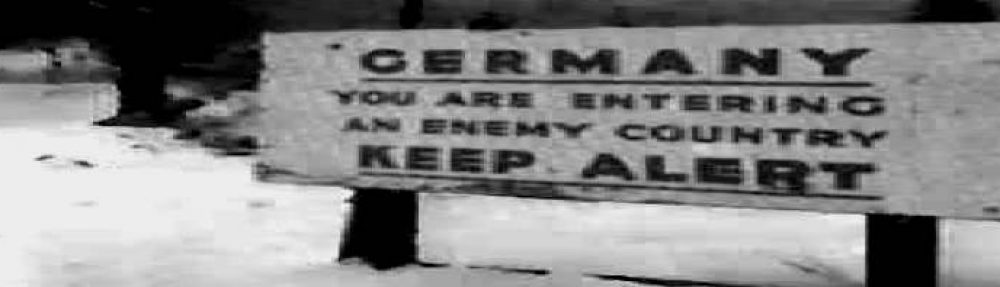
Italian journalist Mario Giordano has accused Germany of a coronavirus cover-up, after a team of scientists in Milan discovered the coronavirus epidemic came to Italy via Germany and not directly from China.

On Wednesday, Italy imposed sweeping nationwide restrictions on travel and public life, in a desperate attempt to contain the coronavirus outbreak that looks set to plunge the world’s eighth largest economy into a steep recession. The measures announced include travel restrictions on 60 million residents, a ban on public events, the closure of schools, cinemas, museums and gyms, restaurants, bars and shops. The Government took action as the number of deaths caused by coronavirus reached 827 and infections topped 14,000.

The restrictions are in place until at least April 3.

Ever since the contagion first came to light in the prosperous northern region of Lombardy on February 21, scientists have been hunting for the so-called “patient zero”.

After extensive analysis, the Milan team has not yet identified the individual at the root of the worst outbreak in Europe, but they have matched the Italian genetic sequencing of the virus to a case that emerged in Germany in January.

Massimo Galli, head of the university research group and of the infectious-diseases department at Milan’s Sacco hospital, said: “The sequence closest to the base of the branch, which is the one that probably precedes the others, came from a person infected in Munich in all likelihood between January 19-22.”

“We can imagine that a person who contracted the virus in the context of those infected in Munich came to Italy and the area where the virus first spread without showing any symptoms,” Galli told Reuters.

He said their analysis showed that the Italian outbreak must have started between Jan 25-2well before the first patient was officially diagnosed in the northern town of Codogno.

In a video posted on his Youtube channel, famous Italian journalist and writer Mario Giordano accused Germany of a “coronavirus cover-up”, as he claimed that despite knowing that the virus had been present in their country, German officials kept quiet.

He said: “The news that the first case of contagion would have been in Germany has not had enough visibility.

“According to studies, Germany has known about this since the end of January but kept quiet.

“They didn’t say anything.

“This is shameful and incorrect behaviour.

“It should spark indignation in this country – which for the past two weeks has been under attack from all over the world.”

Mr Giordano noted: “There is this image of Italy being plague-ridden. And then it turns out that the virus came from Germany.

“They knew everything but didn’t say a word.”

According to the latest figures, Spain has now surpassed 6,390 confirmed cases, with Germany and France nearing the 5,000 mark, while Italy has reached at least 21,157.

The UK now has 1,140 confirmed cases.

At least ten European countries have put in place border closures, including Denmark, Austria, Slovakia, Ukraine, Hungary, Poland and the Czech Republic.

https://www.express.co.uk/news/world/1255506/coronavirus-italy-cases-deaths-uk-germany-angela-merkel-eu-spt

Greece installs concrete blocks at border, digs trenches to deter migrants

Greek forces, in what looks like preparations for an armed conflict, have installed massive concrete blocks, erected additional barbed wire, and dug trenches at key border crossing points at the Greek-Turkish border in an effort to deter migrants from crossing.

In a remarkable shift from Greece’s response to the 2015 migrant crisis, where the then left-wing Syriza government allowed migrants to pass freely through the country into the rest of Europe, Greece’s new conservative government appears to be taking seriously its new designation as the “shield of Europe”, bestowed on country by European Commission President Ursula von der Leyen at the outbreak of the migrant crisis.

The Turkish Anadolu Agency reported on the new development, writing that “Greece on Friday placed 5-foot [1.5-meter] concrete blocks at its Kastanies border crossing with Turkey to stop the entry of asylum seekers.”

Video of the blocks being installed in front of migrants watching on the other side of the border demonstrates Greek defiance to Turkish President Recep Tayyip Erdoğan’s calls for Greece to open its border.

“This is my proposal to Greece: open the doors. Those people will not stay in Greece permanently and let them cross into other countries in Europe,” Erdoğan said after leaving a meeting to resolve the migrant crisis in Brussels earlier this week that ended in failure.

Turkey has issued a range of demands before it will consider closing the border to migrants, including allowing visa-free travel for 80 million of Turkey’s citizens into Europe.

“Until all Turkey’s expectations, including free movement, updating of the customs union and financial assistance, are tangibly met, we will continue the practice on our borders,” Erdoğan said on Thursday in a televised speech.

Polling has only strengthened the Greek government resolve, with 76 percent of Greek citizens saying they support the conservative government’s response to the border crisis, according to Prome Thema.

Greece has accused Turkish forces of operating with migrants to attack Greek security forces, including providing migrants with tear gas to use against Greek police.

Turkish police appear have also gone a step further and actively fired tear gas at Greek security forces, according to video released by the Associated Press. According to the Greek City Times, Greek police have responded by installing large wind turbines along the border to blow the tear gas and smoke from fires back towards the Turkish side.

Turkish jets have also conducted flybys on the Greek-Turkish border and Turkish special forces have been accused of firing live ammunition in the direction of Greek police.

Just on Thursday, video of migrants hurling Molotov cocktails at police and lighting fires at the border were widely disseminated on social media.

rmx.news/article/article/greece-installs-concrete-blocks-at-border-digs-trenches-to-deter-migrants