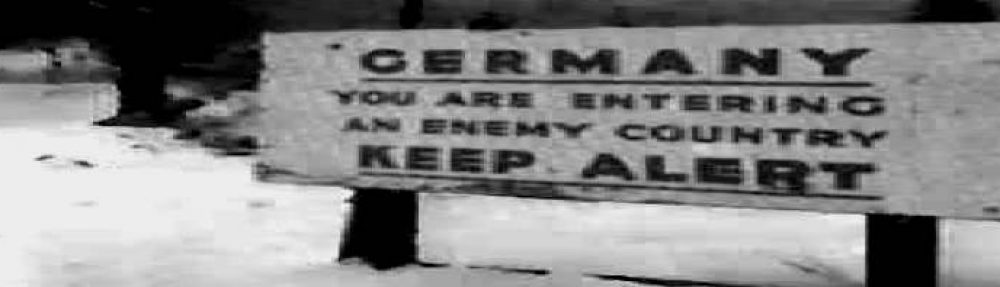
Turkish soldier shoots at Greek & German border protectors at Evros

A dangerous incident between Turkish and German border guards occurred at the Greek-Turkish land border.

Turkish soldiers targeted German officials and fired at least one shot. It is unclear where the bullet went.

The news emerged from an internal document of the European border protection agency Frontex, which was made available to German media outlet SPIEGEL. No one was injured in the incident.

The German Ministry of the Interior confirmed the incident. A Turkish soldier fired a shot at 19:15 on Tuesday evening when German officials were on the other side of the border.

German officers are stationed at the Greek border as part of a Frontex mission. The incident occurred near the Greek town of Tychero. According to SPIEGEL information, after German border guards heard a shot from the Turkish side of the border on Tuesday evening, they immediately took cover.

Through a pair of binoculars, the German border guards saw a Turkish soldier aiming an automatic weapon at the Greek side from the other side of the river.

Then the Turkish soldier showed his middle finger and went back to his tent. Other soldiers shouted “come, come” and a short time later, six other Turkish soldiers had appeared and also aimed their guns at the German and Greek border guards.

Frontex said on request that all the facts about the incident were with the Greek authorities. The Turkish government have not commented on the incident.

The day after the incident, the Greek Deputy Migration Minister George Koumoutsakos phoned Frontex boss Fabrice Leggeri. Among other things, they discussed the possibility of sending more Frontex officials to Greece. The number of refugees who try to cross the land border or to the Greek islands in the Aegean usually increases in summer.

Germany has been participating in the Frontex mission in Greece for several years. They are mostly federal police officers who assist the Greek authorities in checking the border, but the state police also provide officials for the German Frontex force. By March, there were around 60 officials.

After a call for help from Athens at the beginning of March, Germany pledged another 20 police officers and a seaworthy helicopter to observe refugee movements in the Mediterranean. At the time, Greece feared that Turkey could completely open the borders, especially to Syrian refugees.

The relationship between Frontex and Turkey was already tense after an aggressive incident in March. At that time, two Turkish planes had been tracking a Danish reconnaissance jet, which was commissioned by Frontex, for several minutes. In Germany, the action was seen as an aggressive act.

greekcitytimes.com/2020/05/01/turkish-soldier-shoots-at-greek-german-border-protectors-at-evros/

Germany Raids Mosques After Hezbollah Ban

Pressure by the Trump administration on the German government paid off when that country finally banned Hezbollah, the Shiite Islamist terror militia in Lebanon allied with Iran. And Iran’s role in spreading the Wuhan Virus probably didn’t help either.

And after the ban, a belated crackdown followed.

Germany on Thursday completely banned Lebanon’s Iran-backed Hezbollah movement from carrying out activities on its soil, as police raided mosques and venues linked to the group.

Like the European Union, Germany had until now only outlawed Hezbollah’s military wing while tolerating its political wing.

But in a shift immediately welcomed by the United States and Israel, the German interior ministry said it now considered the entire movement a “Shiite terrorist organisation”.

“Hezbollah is a terrorist organisation deemed responsible for numerous attacks and kidnappings worldwide,” Interior Minister Horst Seehofer told Germany’s Bild daily.

Not exactly news.

Dozens of police and special forces stormed mosques and associations linked to Hezbollah in Bremen, Berlin, Dortmund and Muenster in the early hours of the morning, German media reported.

The Al-Irshad mosque in Berlin was sealed off with at least 16 police vans parked outside, an AFP photographer saw. Masked police officers were seen walking in and out of the mosque.

Although Hezbollah has no official presence in Germany, security forces estimate it has roughly a thousand members in the country.

They are thought to use Germany as a safe haven to make plans, recruit sympathisers and raise funds, including through criminal activities.

Why raid mosques? Because contrary to the myth that Islamic terror has nothing to do with Islam, mosques are incubators of terrorism in the United States, Europe, and around the world. Islamic terrorist groups are rooted in Islam and set up their core bases using Islamic institutions.

US ambassador to Germany, Richard Grenell welcomed Berlin’s change in stance and called on “all European Union member states to take similar action”.

Grenell gets most of the credit for the move.

https://www.frontpagemag.com/point/2020/04/germany-raids-mosques-after-hezbollah-ban-daniel-greenfield/

WATCH: Meet the police in Merkel’s Germany

Two police officers attempt to arrest a migrant in the Berlin district of Neukölln. The policeman shows some initiative, although he cannot get a grip on the migrant even with pepper spray. He probably has the female colleague with him just for fun, at least she is just watching the embarrassing scuffle. In the end the migrant escapes.

politikstube.com/berlin-neukoelln-die-polizei-macht-sich-zur-lachnummer/

WATCH: Migrant tells Danish man: “You Danes are animals, you will be exterminated”

Rasmus Paludan, a Danish anti-Islam politician who requires police protection everywhere he goes, recently held a demonstration with members of his party Stram Kurs (Hard Line) at a school in Århus – Denmark’s second largest city.

During the demonstration, party members recorded video of the kind of reception they received from the locals. One video that’s been uploaded to Rasmus Paludan’s YouTube channel shows a bearded, aggressive migrant yelling at a young Danish man. Although it’s difficult to make out all the words, Kim Møller, an author at the political blog Uriasposten, has transcribed what can be heard on the video.

The migrant says:

“We have more children. You get one or two. In ten or fifteen years there will be more Muslims than Danes in this country. … The Danes are five million, You are almost extinct man. … You fuck with animals, that’s why you don’t get children…You Danes are being exterminated. You’re like animals… I will never be Danish, I want my mentality and my tradition, but I will stick my Danish passport and the Danish People’s Party in my ass, I will burn my Danish passport… We will not integrate, we will continue to fuck your society… Suck a cock!”

Recently, Muslim migrants in Denmark have come out of the woodwork to brazenly reveal their abject disdain for the Danish people, their culture, and their religion.About two weeks ago on Easter Sunday, the holiest day for Christians around the world, a Danish church was defaced with Arabic graffiti which read: “We conquer Denmark. There is no God but Allah,” Voice of Europe reported.

voiceofeurope.com/2020/04/migrant-tells-danish-man-you-danes-are-animals-you-will-be-exterminated-video/

While German pensioners have to collect empties to avoid starvation, refugees throw food in the dirt

Last Monday evening there was an uproar in the quarantine accommodation for asylum seekers in Puchheim. Refugees threw food around.

About 20 residents are accommodated there. Because they could infect others with the coronavirus, they are not allowed to leave the building. The refugees no longer receive money for shopping, but food is delivered to their doorstep.

Obviously there is no understanding for this among a group of refugees: They have rabidly stopped the food from being distributed. The police had to intervene. The food was left on the property to de-escalate. When the police and staff of the district administration office left, all the delivered apples, bread and milk were thrown over the fence. The district office is responsible for accommodation. District Administrator Thomas Karmasin: “The behaviour of the troublemakers is completely unacceptable and will be investigated thoroughly.” The quarantine was ordered by the health department. Violations are not a trivial offence. Efforts were being made to find accommodations and provide food at short notice. “I actually expect this form of hospitality to be appreciated accordingly,” says Karmasin. Puchheim’s mayor Norbert Seidl agrees regarding the handling of food – and the respect for those who provide it. “I am appalled, such behaviour is not acceptable. No matter if you are frustrated or sick or whatever.”

merkur.de/lokales/fuerstenfeldbruck/puchheim-ort29319/bayern-puchheim-coronaviurs-fluechtlinge-quarantaene-polizei-asylbewerberheim-eklat-infizierte-13735115.html

Nine-year-old Swiss coronavirus victim turns out to be 109 due to filing error

Switzerland’s outdated medical reporting system still relies on fax and manual data entry, which has led to a number of confusing mistakes.

On Saturday, it appeared Switzerland had recorded its first child victim of the coronavirus, until the victim was found to be 109 rather than 9. 

The reason? The country’s outdated medical record-keeping system, which relies primarily on fax rather than electronic record-keeping, had recorded that the victim was born in 1911 rather than 2011. 

Over the same week, a similar error saw one 87-year-old victim recorded as being 27 years of age – due to a similar failing. 

Children and young people have been largely unaffected by the virus in Switzerland and elsewhere – meaning that the reports represented a significant departure from the existing data in Switzerland. As at April 29th, there have been just under 1,700 deaths in Switzerland due to the virus – however nobody under the age of 30 has died in Switzerland and only six people between the ages of 30 and 50 have passed away due to Covid-19. 

https://www.thelocal.ch/20200429/nine-year-old-corona-victim-was-actually-109-switzerlands-fax-based-reporting-system-causes-confusion

German economy faces worst recession in post-war history

Europe’s largest economy will contract by 6.6 percent this year, marking the country’s worst recession in post-war history, the Munich-based Institute for Economic Research (IFO), one of Germany’s leading think-tanks said on Wednesday.

In its April survey of around 8,800 companies, the think-tank found that Germany’s economic output had fallen by 16 percent across all industries due to the national lockdown measures, which have been in place since March 22, and the survey expected a 12.2 percent fall in the second quarter based on companies’ capacity utilization data.

“We won’t be back to the pre-corona situation until the end of 2021,” Timo Wollmershaeuser, head of economic forecasting at IFO, said in a statement. That would require an economic expansion of 8.5 percent next year, he added.

Several of Germany’s economic sectors have been hard-hit by the effects of coronavirus restrictions, with ravel agencies and tour operators reporting the biggest slump, followed by the aviation, hotel and restaurant industries.

The arts and entertainment sector and vehicle manufacturing have also been affected. The only industry that has seen a boost has been the pharmaceutical sector. This has been reflected by a recent jump in shares of German pharma giant Bayer.

IFO predicted that once the lockdown is gradually eased, all sectors of the economy could see a boost beginning with the third quarter.

Chancellor Angela Merkel has warned that the country is far from out of the woods with the pandemic, and there are fears that a second wave could hit the country now that shops and playgrounds have been largely allowed to open in most states. Some students will also return to classes as of May 4.

According to the latest data, Germany had 161,539 coronavirus cases, the sixth highest number in the world, but its death rate of 77 per million was significantly lower than in Spain, the worst-hit European country (236,899 cases), where the death rate is 519 per million.

rmx.news/article/article/german-economy-faces-worst-recession-in-post-war-history