British Public SLAM Piers Morgan
1

The fallout from an alleged anti-Israel scandal embroiling Germany’s foreign ministry widened this week with B’nai B’rith International blasting a diplomat for defending an academic who promotes the BDS movement, spreads antisemitism, and trivializes the Holocaust.The Jerusalem Post has exclusively obtained the letter B’nai B’rith sent to German Foreign Minister Heiko Maas.
“On behalf of B’nai B’rith International’s more than 100,000 members and supporters in over 40 countries, we write to express our deep dismay at recent tweets by Andreas Görgen, the Ministry’s director for culture and communication. Mr. Görgen has posted multiple times on his official twitter feed in defense of Achille Mbembe, a Holocaust-minimizer and denier of Israel’s right to exist,“ the organization wrote.BDS is an abbreviation for the Boycott, Divestment, Sanctions movement targeting the Jewish state. The German Bundestag classified BDS last year as an antisemitic campaign.B’nai B’rith added that “Mbembe has signed an abhorrent BDS petition against scholars from Ben Gurion Univeristy. He has called for the ‘global isolation’ of the Jewish state and has compared apartheid to the Holocaust. Görgen’s pro-Mbembe tweets, meanwhile, include the posting of an article accusing Mbembe’s detractors of conducting a ‘witch hunt’ against him.”The Jewish organization said it “is alarmed that a senior Foreign Ministry official would use his official twitter feed to defend the bigoted pronouncements of a demagogue who engages in the sort of malicious behavior encapsulated in the International Holocaust Remembrance Alliance’s working definition of antisemitism, such as the denial of the Jewish people’s right to self-determination. We would expect the Ministry to forcefully denounce Mbembe, rather than defend him.”B’nai B’rith continued “we call on you [Maas] to condemn both the bigotry of Mr. Mbembe and the tweets of Mr. Görgen in Mbembe’s defense. We hope that your Ministry will set an important example in this instance by demonstrating zero-tolerance for antisemitism.”
Maas declined to comment to numerous Post press queries.A spokesperson for the ministry told the Post last week when asked aboutthe topic that ”We ask for your understanding that we won’t comment on the issue mentioned.” The international human rights organization Simon Wiesenthal Center’s Rabbi Abraham Cooper told the Post on Tuesday that the NGO is considering including the senior-level German diplomat Görgen on its top 10 list of worst outbreaks of antisemitism and anti-Israelism for 2020 due to his support of antisemitic positions.Rabbi Cooper, the associate dean of the Wiesenthal Center, said that “Andreas Görgen would be a candidate, especially because of his rank and the timing his tweets and statement, which were made leading up to Yom Hashoah [Holocaust Remembrance Day].”“It is past due for the German Foreign Minister Heiko Maas, who said he went into politics because of Auschwitz, to start showing in real terms and real life his commitment to fight antisemitism, especially when it rears its head in his Foreign Ministry,” said Cooper.“I am worried sick that for the second year in row we have consider naming a top echelon official of the German government in the top 10. We need the German Government to act swiftly against antisemitism expressed from within its own diplomats and gatekeepers.”Last year, the Simon Wiesenthal included Germany’s ambassador to the UN, Christoph Heusgen, on its top ten list for equating Israel with the terrorist entity Hamas at the UN and voting repeatedly against the Jewish state.Last year, the director of the German Foreign Ministry’s representation for the Palestinian territories, Christian Clages, was revealed to have liked scores of antisemitic tweets while using his government Twitter feed. Clages retained his job. The German paper Bild broke the story about Clages.The Foreign Ministry disciplined Clages for liking neo-Nazi and KKK tweets. Görgen has refused to answer numerous Post media queries.
Sweden’s Covid-19 mortality rate is among the 10 highest in the world, at 240 per million population and steadily rising. According to US President Trump, Sweden is “paying heavily” for its decision not to enforce a lock-down.
Sweden has not imposed strict restrictions on its citizens and allowed many businesses, including restaurants and hair salons, and schools to remain open unlike many of its Nordic neighbours.
Sweden’s death rate per 1 million population is significantly higher than Finland, 37, Denmark, 76, and Norway, 38, according to Worldometers, which has been tracking the number of worldwide cases.
“Despite reports to the contrary, Sweden is paying heavily for its decision not to lockdown. As of today, 2462 people have died there, a much higher number than the neighboring countries of Norway (207), Finland (206) or Denmark (443),” the president tweeted on Thursday.
He added: “The United States made the correct decision!” It is not clear why, however, since in New York state 19 nursing homes have reported 20 or more deaths linked to SARS-CoV-2, raising the prospect of hundreds of unattributed deaths in a state where almost 24 000 people have died from the disease alone.
In Scandinavia, Finland declared a state of emergency on March 16 and shut down all schools, restaurants and bars on April 1, while Denmark announced the first round of closures on March 11.
When a group of 22 Swedish scientists published an open letter warning that the country needed drastic measures, the substance of their arguments was ridiculed. Instead critics argued that the data used for the Covid-19 death rate made Sweden look worse than other “cautious” estimates.
One Swedish columnist, Peter Kadhammar, even appeared to believe that information about the pandemic was simply some kind of silly cheerleading public relations exercise. “The Swedes are at least as cool as the British,” he argued. Prime Minister Boris Johnson had only “strived to be an English eccentric” with his failed policy of herd immunity.
“No country cultivates its peculiarities as much the United Kingdom. No country is so proud of its features,” Kadhammar added, suggesting that Sweden follow this ill-fated example. Britain now has Europe’s second-highest Coronavirus death toll.
The fact also remains that Sweden now has six times more deaths per capita than neighbouring Norway or Finland.
Italian newspaper La Repubblica warned too that Swedish doctors would have no choice but to deny respirators to patients over the age of 80, and even those as young as 60 with underlying health conditions. This is sadly now a fact.
Despite Sweden’s paltry record, the World Health Organization has praised Sweden as a “model” for fighting the coronavirus pandemic.
Dr. Mike Ryan, the WHO’s top emergencies expert, said there are “lessons to be learned” from the Scandinavian nation, which has largely relied on citizens to self-regulate. “I think there’s a perception out that Sweden has not put in control measures and just has allowed the disease to spread,” Ryan told reporters. “Nothing can be further from the truth.”
Former chief epidemiologist Johan Giesecke, advisor to the Swedish Government, happens to be an advisor to the director general of the WHO. He hired Anders Tegnell who is currently directing Swedish strategy and is also the first Chief Scientist of the European Centre for Disease Prevention and Control.
In an interview with The Post, Giesecke said the correct policy was to protect the old and the frail only. He called Covid-19 a “mild disease” and similar to the flu, and it was the novelty of the disease that scared people. It is the reality of the disease that has been scaring people however.
According to Giesecke, the British Imperial College paper arguing for lockdowns was “not very good” and he had never seen an unpublished paper with so much policy impact. The paper was very much too pessimistic, he added.
He later admitted however that the failure to protect the elderly in nursing homes was because “asylum seekers” and “refugees” on the staff were people who “may not always be understanding the information”.
This outrage has been met with silence in Sweden where the health of elderly people has been put at risk for the sake of immigrants.
Giesecke has claimed that the actual fatality rate of Covid-19 is the region of 0,1 percent. But currently the crude case fatality rates are around 6 percent globally.
Fresh serological data could certainly alter the fatality rate among people who have been infected, but as infectious disease experts point out, even a seemingly low rate can translate into a massive death toll if the virus spreads through a major portion of the population.
“I think it is the worst pandemic since 1918,” Cecile Viboud, an epidemiologist at the National Institutes of Health’s Fogarty International Center told the Washington Post. That pandemic claimed an estimated 675 000 lives in the United States.
The New York state rate is 0,5 percent — which is one death per 200 infections. It is a staggering figure, “way more than a usual flu season and I would think way more than the ’57 or 1968 [influenza] pandemic death toll, too,” Viboud said.
The United States alone could potentially count 1 million deaths at this infection rate if half the population became infected.
freewestmedia.com/2020/05/02/swedens-mortality-rate-among-the-highest-in-the-world/
The German government, after years of equivocating, has announced what amounts to a partial ban on the Iran-backed Lebanese terrorist group Hezbollah — Arabic for “The Party of Allah” — in Germany.
The so-called ban — supported by the center-right Christian Democrats and the center-left Social Democrats, the two parties that make up Germany’s ruling coalition, and also by the classical liberal Free Democrats — has been hailed as “important,” “significant,” and “long overdue.”
The ban is in fact a compromise measure between German lawmakers who want to take a harder line against Iran and those who do not. As a result, the ban falls far short of a complete prohibition on Hezbollah and appears aimed at providing the German government with political cover that allows Germany to claim that it has banned the group even if it has not.
On April 30, the German government’s Federal Gazette (Bundesanzeiger) reported that Hezbollah was subject to an activity ban (Betätigungsverbot), but not an organizational ban (Organisationsverbot) — an important legal distinction because the activity ban is weaker than the organizational ban.
The two-page document, which carefully avoids referring to Hezbollah as a terrorist organization, prohibits the group’s logo to be displayed “in public, in meetings or in writings.” In addition, any assets that Hezbollah may have in Germany are to be confiscated.
The ban does not call for Hezbollah mosques or cultural centers to be closed, nor does it require that members of the group be deported. The ban also does not prohibit Hezbollah operatives from travelling to Germany.
After the so-called ban was made public, German Interior Minister Horst Seehofer ordered police to carry out raids on four mosques and cultural centers linked to Hezbollah: Berlin’s al-Irschad mosque, two cultural centers in Bremen and Münster, and a Lebanese community group in Dortmund.
Hezbollah, however, is believed to have more than 30 mosques and cultural centers in Germany, where the group is estimated to have upwards of 1,000 operatives, according to German intelligence assessments. It was not immediately clear why German police did not raid all of the mosques and cultural centers linked to Hezbollah.
In any event, the German government effectively gave Hezbollah at least four months to move its assets and operatives out of Germany. The newspaper Die Weltexplained:
“It is still unclear what concrete effects the raids will have…. Berlin SPD politician Tom Schreiber suspects that Hezbollah was prepared for the searches. ‘I assume that an attempt was made to relocate assets and take people out of the country,’ Schreiber told Welt. ‘The question is, what exactly has the ban produced: what assets have been secured, what procedures have been initiated, what further information has been gained about the Hezbollah scene in Germany?'”
On December 19, 2019, the German Parliament, known as the Bundestag, approved a three-page resolution — “Effective Action against Hezbollah” (“Wirksames Vorgehen gegen die Hisbollah”) — that called on the German government to ban the activities of Hezbollah on German territory.
According to the Bundestag, a complete ban of Hezbollah is impossible because the group’s structures in Germany are “not currently ascertainable.” The Bundestag’s statement in the original German states:
“Hezbollah-related association structures, which could justify an organizational ban, are not currently ascertainable.” (“Der Hisbollah zuzurechnende Vereinsstrukturen, die ein vereinsrechtliches Organisationsverbot begründen könnten, seien derzeit jedoch nicht feststellbar.”)
The Deputy Chairman of the CDU/CSU parliamentary group in the Bundestag, Thorsten Frei, stated:
“Hezbollah-related association structures, which could justify an organizational ban (vereinsrechtliches Organisationsverbot), are not ascertainable, despite efforts by the federal government since 2008. An organizational ban is therefore not an option due to the lack of a verifiable domestic organizational structure. However, we are free to pursue an activity ban (Betätigungsverbot) that we have also applied to other terrorist organizations that lack a demonstrable domestic organizational structure.”
It is utterly implausible that Germany, one of the wealthiest and most technologically advanced countries in Europe, is unable to ascertain the organizational structure of Hezbollah within its own borders. More plausible is that Germany wants to project a public appearance of cracking down on Hezbollah while maintaining direct access to its leadership.
The idea to ban Hezbollah in its entirety originated with Germany’s conservative party, Alternative for Germany (Alternative für Deutschland, AfD), the third-largest party in the German parliament. The AfD has not been pleased with the partial ban. Addressing the German parliament on December 19, when the Bundestag called on the German government partially to ban Hezbollah, the deputy chairwoman of the AfD parliamentary group in the German Bundestag, Beatrix von Storch, explained:
“Six months ago, the AfD presented a resolution in the Bundestag to ban Hezbollah, a resolution which you vehemently rejected and which, since then, you have blocked in caucus. Now, six months later, you are collectively rushing through the door that we have politically opened. If this would happen with more AfD proposals, Germany would be in a much better place….
“Nevertheless, your resolution has two central weaknesses. The first weakness is that you are asking for only an activity ban (Betätigungsverbot). We want a specific organizational ban (Organisationsverbot). According to the Crime Fighting Law (Verbrechensbekämpfungsgesetz) of 1994, the activity ban is the weaker legal means when compared to an organizational ban. There is no reason in the world why you would fight a terrorist organization with the weaker means and not the stronger. You are making a loud bark, but you are not biting.
“The second fundamental weakness of your resolution is your justification for using the weaker means. You write, and I quote, ‘Hezbollah-related association structures, which could justify an organizational ban (vereinsrechtliches Organisationsverbot), are not ascertainable.’ That is objectively false, as confirmed by the 2017 and 2018 annual reports of Germany’s domestic intelligence agency (Bundesamt für Verfassungsschutz, BfV). The 2018 report states, and I quote, ‘In Germany, Hezbollah followers maintain organizational and ideological cohesion, among other things, in local mosque associations, which are primarily financed by donations.’ Do you even read your own intelligence reports? In case it is too long for you to read, it is located on page 214. Just check it!
“If you do not want to touch Hezbollah’s mosque associations, then this resolution is pure symbolism politics (Symbolpolitik), and symbolism politics cannot continue. What is needed is the complete ban of Hezbollah. Hezbollah’s propaganda and terror financing in Germany must be stopped. The mosque associations that exist must be disbanded, and most importantly, Hezbollah supporters must be deported. This, by the way, is also demanded by the Bundestag’s Anti-Semitism Resolution, which expressly calls for the deportation of supporters of anti-Semitism. If this does not apply to supporters of Hezbollah, which wants to send Jews to the gas chambers, and wants to destroy Israel, then to whom could it apply?”
On April 30, after the German government announced its half-measure against Hezbollah, von Storch said:
“Interior Minister Horst Seehofer has finally pushed through a ban on Hezbollah in Germany, which the Alternative for Germany (AfD) faction has been demanding for a very long time but was blocked in the Bundestag. The AfD welcomes Seehofer’s measures against the Hezbollah terrorist organization, although they are not sufficiently extensive. The AfD continues to demand that the Islamic terrorist organization be completely banned from organizing and we regret that our request in the Bundestag has been rejected. There is no place for Israel haters in Germany.”
The AfD’s Chairman in the Foreign Affairs Committee of the German Bundestag, Petr Bystron, added:
“This step was long overdue. The Federal Government has finally given in to pressure from the AfD parliamentary group. Hezbollah was allowed to do mischief in Germany for far too long: the Al-Quds March in Berlin demanded the destruction of Israel, speakers were allowed to spread their anti-Semitic agitation in Berlin and Hamburg.
“Now further steps must follow: Taxpayer support of anti-Israel Boycott, Divestment and Sanctions (BDS) organizations close to the SPD, the Greens and the Left, must end, as well as the taxpayer’s funding of the Hezbollah government in Lebanon and the Islamic terrorist regime in Tehran. We will now pay particular attention to the infiltration of German universities and public broadcasting by sympathizers of these terrorist organizations. The ‘ban on activity’ was only the first step. The fight goes on.”
On April 30, German Foreign Minister Heiko Maas tweeted:
“Hezbollah denies Israel’s right to exist, threatens violence and terror, and continues massively to upgrade its missile arsenal. In Germany we have to exhaust the rule of law to tackle Hezbollah’s criminal and terrorist activities.”
Maas, however, is one of Europe’s top supporters of Iran, which shares Hezbollah’s visceral hatred of Israel. On March 31, Maas proudly announced that European countries, led by Germany, had circumvented U.S. sanctions on Tehran.
The AfD’s concerns about Germany’s half-measures regarding Hezbollah are justified. The Kurdistan Workers’ Party (PKK), for instance, has been subject to an “activity ban” in Germany since 1993. Despite the ban, the PKK remains very active in Germany. The group had more than 14,500 members in Germany in 2020, according to German intelligence.
German security expert Stefan Schubert wrote that Germany’s partial ban on Hezbollah reflects a lack of political will to crack down on the group. He also predicted that the ban will likely have only a very small impact on Hezbollah’s activities in Germany:
“Today’s completely late action by the federal government is primarily a symbolic gesture. If the government were really serious about annihilating Hezbollah in Germany, it should have established a special commission and provided the security authorities with financial and human resources to identify and dismantle the group nationwide.”
The most immediate focus of the ban appears aimed at ending the annual anti-Israel Quds Day (Jerusalem Day) rally, originally scheduled to be held in Berlin on May 22, the last Friday of Ramadan. The annual rallies, held in cities around the world, are often attended by Hezbollah operatives and sympathizers waving the yellow Hezbollah flag and shouting anti-Israel slogans. After the German government announced its ban on Hezbollah, the organizers of this year’s rally in Berlin decided to cancel the event.
Worldwide, Britain, Canada, Israel, the Netherlands, the United States, the 22-member Arab League, the six-member Gulf Cooperation Council as well as Argentina, Colombia, Guatemala, Honduras and Paraguay have banned Hezbollah in its entirety.
The European Union, however, has resisted pressure to outlaw all of Hezbollah. European officials, who make an artificial distinction between Hezbollah’s military and political wing, regularly claim that a total ban might destabilize Lebanon’s political system, which is now dominated by the terrorist group. Others are worried that a complete ban of Hezbollah could hinder political and diplomatic efforts to salvage the now-defunct 2015 nuclear accord with Iran.
The European Union reluctantly banned Hezbollah’s “military wing” in July 2013, after the group was implicated in the July 2012 bombing of a bus carrying Israeli tourists in Burgas, Bulgaria. Five Israelis were killed in the attack.
Hezbollah officials, however, have repeatedly affirmed that the group operates as a single organization with a unified system of command and control. In a July 2013 interview with the German newsmagazine Der Spiegel, conducted immediately after the EU announced its partial ban on Hezbollah, the group’s spokesman, Ibrahim Mussawi, said:
“Hezbollah is a single large organization, we have no wings that are separate from one another. What’s being said in Brussels doesn’t exist for us.”
Hezbollah’s deputy secretary general, Naim Qassem, repeated that the group is structurally unified:
“We don’t have a military wing and a political one; we don’t have Hezbollah on one hand and the resistance party on the other…. Every element of Hezbollah, from commanders to members as well as our various capabilities, is in the service of the resistance, and we have nothing but the resistance as a priority.”
Qassem, in an interview with the Lebanese newspaper Al-Mustaqbal, said:
“Hezbollah has one single leadership, and its name is the Decision-Making Shura Council. It manages the political activity, the jihad activity, the cultural and the social activities. Hezbollah’s Secretary General is the head of the Shura Council and also the head of the Jihad Council, and this means that we have one leadership, with one administration.”
https://www.gatestoneinstitute.org/15964/germany-hezbollah-partial-ban
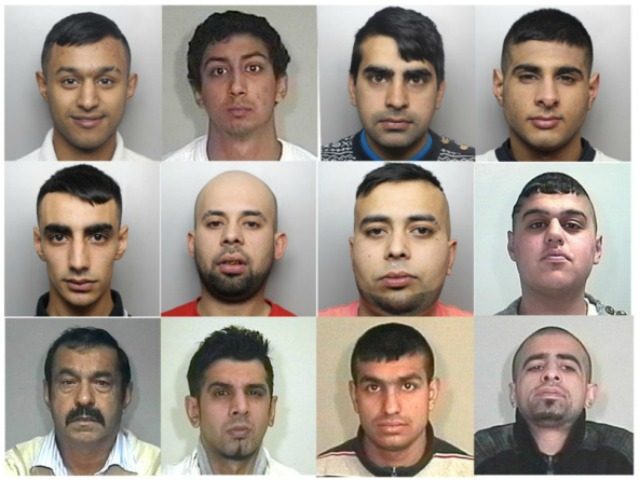
A woman who was sexually abused by Pakistani grooming gang members is now receiving racist abuse from “far-left groups” for speaking out online.
Speaking under the pseudonym “Ella”, the woman revealed that she was called “a white s**g, a white c***, a white whore, a white b***h and a f****** gori which is their name for a white person” by her abusers, who raped her more than 100 times in Yorkshire, Northern England.
“We need to understand racially and religiously aggravated crime if we are going to prevent it and protect people from it and if we are going to prosecute correctly for it,” she told YorkshireLive.
“Prevention, protection and prosecution — all of them are being hindered because we are neglecting to properly address the religious and racist aspects of grooming gang crimes.
“It’s telling them that it’s OK to hate white people.”
Police, prosecutors, and judges have indeed actively resisted treating grooming gang crimes — perpetrated overwhelmingly by Muslim, usually South Asian origin men, against non-Muslim, usually white working-class girls — as racist, and have even backed handing harsher punishments to people who have abused Asian girls and explained that the “shame” they experience makes victimising them more serious than victimising white girls.
Ella’s attempts to highlight the racial and religious aspects of her abuse saw her receive “a lot of abuse from far-left extremists, and radical feminist academics,” however.
“[They] go online and they try to resist anyone they consider to be a Nazi, racist, fascist or white supremacist,” she explained.
“They don’t care about anti-white racism, because they appear to believe that it doesn’t exist.”
One of the tweets Ella received referred to a “white virus” and described its “carriers” as “hideously selfish, hideously inferior and hideously white”, adding that “the malice and ugliness of these ‘people’” should not be underestimated.
On reporting the tweet, however, she was shocked to be told by the social media giant that it did “not breach any of Twitter’s community guidelines.”
“Twitter is creating an environment where hatred towards whites is ‘normalised’, and this leads to even more anti-Western attacks, like the ones against me and hundreds of other girls in Rotherham,” she said.
“It’s telling them that it’s OK to hate white people, and that’s fundamentally wrong.”
The war between Big Tech and the Bill of Rights is really heating up.
The latest shot was fired at The Atlantic, a publication funded by Steve Jobs’ widow through the Emerson Collective, (that’s spelled Apple if you aren’t familiar with the ins and outs of Silicon Valley dynasties), celebrating the Chinese solution to free speech.
Yesterday I wrote about Silicon Valley’s Control Virus.
China is more than the tech industry’s partner: it’s the future. The social credit system and surveillance society, the skyscrapers and robotics, the high-speed rail and the massive factories are more than just TED talks, they’re a grim chrome-plated reality. The censorship, surveillance, and propaganda deployed by Silicon Valley in response to the pandemic was a Chinese solution privatized in an American fashion.
Gates, like other Silicon Valley technocrats, has to keep spreading the myth of Chinese expertise in battling the Wuhan Virus, not just because Microsoft needs the approval of the Communists, but because the Peeps are to tech industry technocrats what the Soviet Union with its collective farms and planned economy was to the New York and Chicago academics of nine decades ago. The future.
The one thing that China’s Xi and Gates’ corporate culture in Redmond could agree on is that people are stupid and need to be told what to do. Most will never do what they’re supposed to unless they’re manipulated, prodded, and even bullied into doing what the masters of the universe think they should.
And The Atlantic’s piece embodies all of that to a fault.
Covid-19 has emboldened American tech platforms to emerge from their defensive crouch. Before the pandemic, they were targets of public outrage over life under their dominion. Today, the platforms are proudly collaborating with one another, and following government guidance, to censor harmful information related to the coronavirus.
Was this translated from the original Russian or the original German?
As surprising as it may sound, digital surveillance and speech control in the United States already show many similarities to what one finds in authoritarian states such as China. Constitutional and cultural differences mean that the private sector, rather than the federal and state governments, currently takes the lead in these practices, which further values and address threats different from those in China. But the trend toward greater surveillance and speech control here, and toward the growing involvement of government, is undeniable and likely inexorable.
In the great debate of the past two decades about freedom versus control of the network, China was largely right and the United States was largely wrong
It depends on what your metric for right is. But why not put your money where your mouth is and call for a Communist dictatorship? Is expecting dot com platforms to run your dictatorship for you because you have contempt for most of the country really more efficient?
The result a decade later is that most of our online speech now occurs in closely monitored playpens where many tens of thousands of human censors review flagged content to ensure compliance with ever-lengthier and more detailed “community standards” (or some equivalent). More and more, this human monitoring and censorship is supported—or replaced—by sophisticated computer algorithms. The firms use these tools to define acceptable forms of speech and other content on their platforms, which in turn sets the effective boundaries for a great deal of speech in the U.S. public forum.
Admitting that is a good step.
Google, Facebook, and a handful of other companies effectively control speech in America. This is a bad development. It effectively shreds the Bill of Rights. An outcome that the two law profs here view as a good thing.
What is different about speech regulation related to COVID-19 is the context: The problem is huge and the stakes are very high. But when the crisis is gone, there is no unregulated “normal” to return to. We live—and for several years, we have been living—in a world of serious and growing harms resulting from digital speech. Governments will not stop worrying about these harms. And private platforms will continue to expand their definition of offensive content, and will use algorithms to regulate it ever more closely. The general trend toward more speech control will not abate.
Not as long as there are a handful of digital platforms that monopolize and define the internet, and who share the same basic politics and worldview.
That is what we need to change. If we don’t, the authors will be right, free speech, and for that matter, a conservative political movement, will be dead.
I’ve spent years writing and speaking about this. Recently there’s been some gathering momentum for action. Breaking up the big dot com monopolies is a vital free step. Or the monopolistic spiders of Google, Facebook, and Amazon will eat everyone in the web.
Here’s a little taste of the coming nightmare.
Behind the scenes, and unbeknownst to most Americans, data brokers have developed algorithmic scores for each one of us—scores that rate us on reliability, propensity to repay loans, and likelihood to commit a crime. Uber bans passengers with low ratings from drivers. Some bars and restaurants now run background checks on their patrons to see whether they’re likely to pay their tab or cause trouble. Facebook has patented a mechanism for determining a person’s creditworthiness by evaluating their social network.
These and similar developments are the private functional equivalent of China’s social-credit ratings, which critics in the West so fervently decry…
The authors argue that we have a choice between the platform monopolies unilaterally dismantling the Bill of Rights or the government doing it for them.
The First and Fourth Amendments as currently interpreted, and the American aversion to excessive government-private-sector collaboration, have stood as barriers to greater government involvement. Americans’ understanding of these laws, and the cultural norms they spawned, will be tested as the social costs of a relatively open internet multiply.
The harms from digital speech will also continue to grow, as will speech controls on these networks. And invariably, government involvement will grow. At the moment, the private sector is making most of the important decisions, though often under government pressure.
Which means that we have 3 choices
1. We can give up our free speech to Big Tech
2. We can give up our free speech to the government
3. We can break up Big Tech and limit the power of the government
Some social conservatives have been going to door no. 2. Attacking Section 230, while popular with some, has the potential to do that. Some social ‘conservatives’ envision a powerful government as their means of creating a better and more moral America. This is a dangerous rabbit hole that will lead exactly where all big government leads.
Fighting for control over a tyrannical system with the Left, only to make it more so in each iteration, will take us down to the dying days of the Roman Empire. That would be history repeating itself as farce.
Freedom will be either lost or won, forever within likely the 2020s. The determining battles will be fought on the internet.
The future is ours to lose.
Turkish authorities initially confidently claimed that the situation regarding the infection was under control – until it resulted in more than 3 000 dead people because of the virus.
On April 30, there were 117 589 recorded cases of the disease, and 3 081 people had died. Turkey now ranks number seven with infected Corona cases – it has even surpassed China.
How did it happen that the infection rate in Turkey within a mere one-and-a-half months of detecting the first case, had grown at such a frightening pace?
It is beyond debate that authorities share an exclusive burden of responsibility for badly managing such a serious and all-pervading crisis. Measures which Turkish authorities took in order to stop the spread were mostly perceived as tardy and not efficient enough.
On March 11, after the first case was announced, Turkey’s Health Minister Fahrettin Koca sanguinely told state media: “If there is an infection in the country, it is very limited. The Coronavirus is not stronger than the measures we will take.”
The next day, on March 12, there were already 47 confirmed cases in Turkey. That same day, public prayers at mosques, of which there are about 80 000 in Turkey, were suspended. But it was already too late, as 16 million people had taken part in weekly prayers, while the virus was already present in the country.
Esin Senol, a professor of infectious diseases at Gazi University in Ankara, noted that the Coronavirus was brought to Turkey mostly by those who returned from foreign countries – and, in particular, by those who had gone on the Muslim pilgrimage to Mecca. “It appears to have spread long before the first case was reported, due to trips to Europe, Iran and Umrah. Limiting testing of those who had recently been abroad in the early days of the outbreak in Turkey also allowed the virus to spread,” Esin Senol pointed out.
On March 18, Turkish president Recep Erdogan made a statement saying that Turkey was in a better position than Britain or France and that it would overcome the Coronavirus with “patience” and “prayers”. He also added that if it was managed well enough, for a week or two, Turkey would see a “good picture ahead of us”.
But the measures that Turkish authorities took in order to achieve that “good picture” were all too often weird, discordant and chaotic. The decision on the introduction of curfews aptly demonstrated this unfortunate situation, which caused a shopping stampede and, accordingly, a complete disregard of the self-isolation requirement.
In the evening of April 10, the Turkish Ministry of Internal Affairs announced the introduction of a curfew from a midnight of April 11 to a midnight of April 13 in 30 cities. In other words, no was allowed outside for 48 hours. People were literally caught off-guard as they were informed just an hour or two before the new restrictions came into force. So, naturally, they rushed to the shops to stock up on groceries and other necessities. Judging from videos on social media, it is clear that the queues at stores were impressive – not to mention the total absence of self-isolation and compliance with the recommended distance of at least 1 metre.
Another questionable restriction adopted by the Turkish state, was the dismantling of benches in parks and streets. In this original way, municipalities were trying to prevent contact between people. This measure, apparently, was aimed primarily at stopping meetings of unemployed locals, who by all means resist quarantine and often spend time on the street, talking with friends. Thus, instead of fighting unemployment, the Turkish authorities prefered to fight the unemployed.
The situation regarding the Turkish healthcare system offers little room for optimism. The country has suffered from a weakened healthcare sector after a failed coup in 2016, when Turkey’s government blacklisted about 15 000 healthcare workers, including a virologist named Mustafa Ulasli, who was allegedly linked to the coup. Moreover, professional medical groups had highlighted a shortfall in equipment, beds and health staff needed to deal with larger numbers of Coronavirus patients.
“It is evident that Turkish hospitals have not prepared adequately in the two and a half months since this deadly virus first came into the spotlight,” the Istanbul Chamber of Physicians said in a statement.
One more driver of epidemiological danger, over which the Turkish government openly admits that it has no control, are illegal migrants and refugees from Syria, Libya and other Arab countries. There are 3,6 million refugees in Turkey but no adequate available information about testing them for the Coronavirus nor medical treatment.
Instead, there are reports by Greek media that warn about Turkish intentions of flooding Europe with Coronavirus infected migrants via Albania and Greece.
Meanwhile, On March 29, healthcare minister Koca announced that the country had surpassed the peak incidence of the infection: “Turkey is currently at the peak incidence of COVID-19, there is a decrease in the number of infected people. Moreover, the mortality rate from the Coronavirus in the country is the lowest in Europe,” Koca bragged to the media.
But despite her lofty pronouncements, it remains difficult to ascertain whether such statements represent the real situation or are somehow sugar-coated by the Turkish government, who cherish the hope of starting the tourism season at the end of May.
freewestmedia.com/2020/05/01/more-bragging-than-doing/

As Christians worldwide celebrated their most significant holiday, their most recognizable figure delivered a distinctly secular message.
On Easter Sunday, the Vatican released a letter Pope Francis wrote to Catholic organizations in South America. Francis wrote that the coronavirus pandemic “might be a good time to consider a universal basic wage” that would enable the poor to enjoy “the benefits of globalism.”
Such a measure, Francis wrote, “would ensure and concretely achieve the ideal, at once so human and so Christian, of no worker without rights.”
Toward the end of his letter, Francis hoped the pandemic would generate “a humanist and ecological conversion that puts an end to the idolatry of money, and places human life and dignity at the center.”
Nowhere in his letter did Francis mention Jesus Christ.
The letter conclusively proves that Francis is transforming the Catholic Church into another non-governmental organization. In the process, he is destroying the church’s identity and credibility.
Francis’ activism reflects and culminates the Vatican’s embrace of humanist utopianism, which Front Page Magazine briefly addressed last year in “They Died For ‘Dialogue’?” That article traced the Holy See’s policy of appeasing Islam and China to the radical globalism adopted at the Second Vatican Council, which met from 1962 to 1965.
A pastoral document written on politics and economics during the council stated that “there must be made available to all men everything necessary for leading a life truly human, such as food, clothing, and shelter. … Hence, the social order and its development must invariably work to the benefit of the human person.”
In 1967, Pope Paul VI called for international agencies to create “a full-bodied humanism,” he wrote, by managing the world’s economic and political development:
Such international collaboration among the nations of the world certainly calls for institutions that will promote, coordinate and direct it, until a new juridical order is firmly established and fully ratified. We give willing and wholehearted support to those public organizations that have already joined in promoting the development of nations, and We ardently hope that they will enjoy ever growing authority.
In 2009, Pope Benedict XVI took that concept to its logical conclusion by advocating that the United Nations direct both international and domestic economic policies:
In the face of the unrelenting growth of global interdependence, there is a strongly felt need…
for a reform of the United Nations…and, likewise, of economic institutions and international finance, so that the concept of the family of nations can acquire real teeth….
To manage the global economy…to bring about integral and timely disarmament, food security and peace; to guarantee the protection of the environment and to regulate migration: for all this, there is urgent need of a true world political authority…
This authority, Benedict wrote, must “seek to establish the common good” and “have the authority to ensure compliance with its decisions from all parties, and also with the coordinated measures adopted in various international forums.”
The ultimate purpose, Benedict wrote, would be to design a “directed” global economy that would “open up the unprecedented possibility of large-scale redistribution of wealth on a world-wide scale” – – including “a worldwide redistribution of energy resources, so that countries lacking those resources can have access to them.”
In promoting such an authority, Benedict subtly redefined the Catholic Church’s primary role from proclaiming the Gospel to ensuring economic benefits for all — or, at least, redefining the Gospel in materialist terms. Benedict even presumed that global economic management through a “true world political authority” can achieve spiritual harmony.
When animated by charity, commitment to the common good … has a place within the testimony of divine charity that paves the way for eternity through temporal action. Man’s earthly activity, when inspired and sustained by charity, contributes to the building of the universal city of God, which is the goal of the history of the human family.
Like his predecessors, Francis believes globalism is pivotal. In an August interview with the Italian newspaper La Stampa, Francis criticized nationalist movements threatening the European Union:
Europe cannot and must not break apart. It is a historical, cultural, as well as geographical, unity. Never forget that ‘the whole is greater than the parts.’ Globalization, unity, should not be conceived as a sphere but as a polyhedron. Each people retains its identity in unity with others.
Francis’ bishops promote the new prime directive. “They Died For ‘Dialogue’?” mentions the praise Bishop Marcelo Sanchez Sorondo, the chancellor of the Pontifical Council for Sciences and Social Sciences, gave China in February 2018:
Right now, those who are implementing the Church’s social doctrine the best are the Chinese.
They search for the common good and subordinate everything to the general welfare.
Sorondo particularly praised China’s implementation of “Laudato Si,” Francis’ environmental encyclical, for “defending the dignity of the person” and “assuming a moral leadership that others have left,” a criticism of the United States’ withdrawal from the Paris Agreement on carbon-dioxide emissions.
Sorondo issued his praise despite the fact that China ranks among the world’s worst air polluters, performs between 10 million and 23 million abortions a year — many of them forced by the government — and persecutes Christians who worship outside of state-approved churches.
In June 2018, Cardinal Pietro Parolin became the first official from the Holy See to attend the Bilderberg Meetings, where international figures from business, finance, government, communications and academia gathered to discuss such topics as political populism, free trade and economic inequality. Eighteen months earlier, Parolin had addressed the World Economic Forum in Davos, Switzerland.
Parolin — the Vatican’s second-most powerful figure as its secretary of state — received an invitation from the Bilderberg organizers, who insisted upon his presence.
Nearly three months later, Chicago Cardinal Blase Cupich vividly illustrated the papacy’s priorities. Immediately after Archbishop Carlo Maria Vigano alleged that Francis protected and promoted sexual predators among the bishops, Cupich performed his best imitation of Marie Antoinette.
“The Pope has a bigger agenda,” Cupich told Chicago’s WMAQ-TV. “He’s got to get on with other things: talking about the environment, protecting migrants and carrying on the work of the Church. We’re not going to go down a rabbit hole on this.”
Cupich repeated that theme the next day at Mundelein Seminary in suburban Chicago: “We have a bigger agenda than to be distracted by all of this,” Cupich told the seminarians, one of whom spoke anonymously to the Chicago Sun-Times about the archbishop’s address. The Sun-Times published the story after receiving confirmation from other sources, including several seminarians.
If Catholic prelates are willing to disregard the victimization of the innocent, nobody should expect them to uphold the church’s historic opposition to abortion and contraception.
In February, one month before California‘s primary, San Diego Bishop Robert McElroy issued voting guidelines for Catholics in his diocese. But McElroy did more than reiterate support for Francis’ positions on environmentalism and immigration. He essentially stated that those positions held greater significance than the church’s stance against abortion and contraception.
While conceding that abortion was “intrinsically evil,” McElroy criticized the idea that “candidates who seek laws opposing intrinsically evil actions automatically have a primary claim to political support in the Catholic conscience.”
“The problem with this approach is that while the criterion of intrinsic evil identifies specific human acts that can never be justified, this criterion is not a measure of the relative gravity of the evil in particular human or political actions,” McElroy wrote. “Telling a lie is intrinsically evil, while escalating a nuclear arms race is not. But it is wrongheaded to propose that telling a lie to constituents should count more in the calculus of faithful voting than a candidate’s plans to initiate a destabilizing nuclear weapons program.”
Similarly, contraception is intrinsically evil in Catholic moral theology, while actions which destroy the environment generally are not. But it is a far greater moral evil for our country to abandon the Paris Climate Accord than to provide contraceptives in federal health centers. (emphasis added)
Perhaps no better example of the Vatican’s embrace of humanist globalism exists than the presence of economist Jeffrey Sachs as a papal advisor. Sachs, who drafted the UN’s Sustainable Development Goals, supports abortion as an integral part of population control. Nevertheless, he participates frequently in Vatican conferences on sustainability.
So why would Francis have Sachs as an advisor? Consider these comments the economist made to the National Catholic Register after one such conference in February:
Asked whether by the Church’s teaching on human dignity he meant respect for life from conception to natural death, Sachs replied: ‘I mean everybody’s economic needs should be met, that people should have the dignity of work, that the poor should be helped, that this is about the core ideas of human well-being.’
Asked if by helping the poor he meant wealth creation, he said: ‘Jesus said, “He who feeds the least among me, feeds me.” He was talking about helping the poor. When Aristotle talks about politics or the common good, he’s talking about a society in which people afforded dignity.’
‘We know why our current system leads to massive inequalities, leaving billions of people behind,’ he said, ‘and so this is about public policy, about individual ethics, social organization. It’s about our attitudes towards others.’
When questioned by Pontius Pilate, Jesus said that his kingdom was not of this world. Yet as Sachs demonstrates, Catholicism is trying to gain the whole world by being like the world. By doing so, the church is losing its own soul.
https://www.frontpagemag.com/fpm/2020/05/roman-globalist-church-joseph-hippolito/
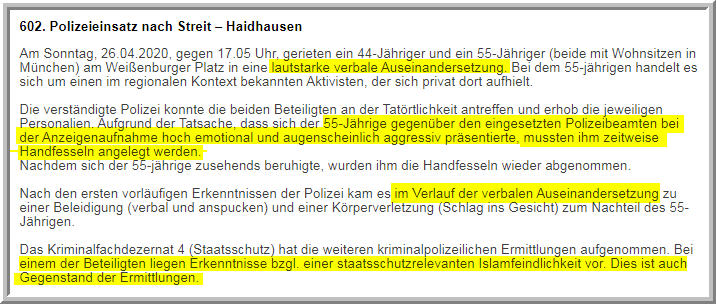
That’ s far out: After Michael Stürzenberger was spat on and punched in the face by a Muslim, the @PolizeiMuenchen is working hard on a justification for the Islamist warrior of God and is handcuffing the victim as a precaution.But no, @PolizeiMuenchen. There was no “verbal altercation”. It was a one-sided attack by the Muslim himself by spitting and punching. Just because a critic of Islam was sitting on a bench in silence.And then the police handcuffed this victim.
 Allah's Willing Executioners